
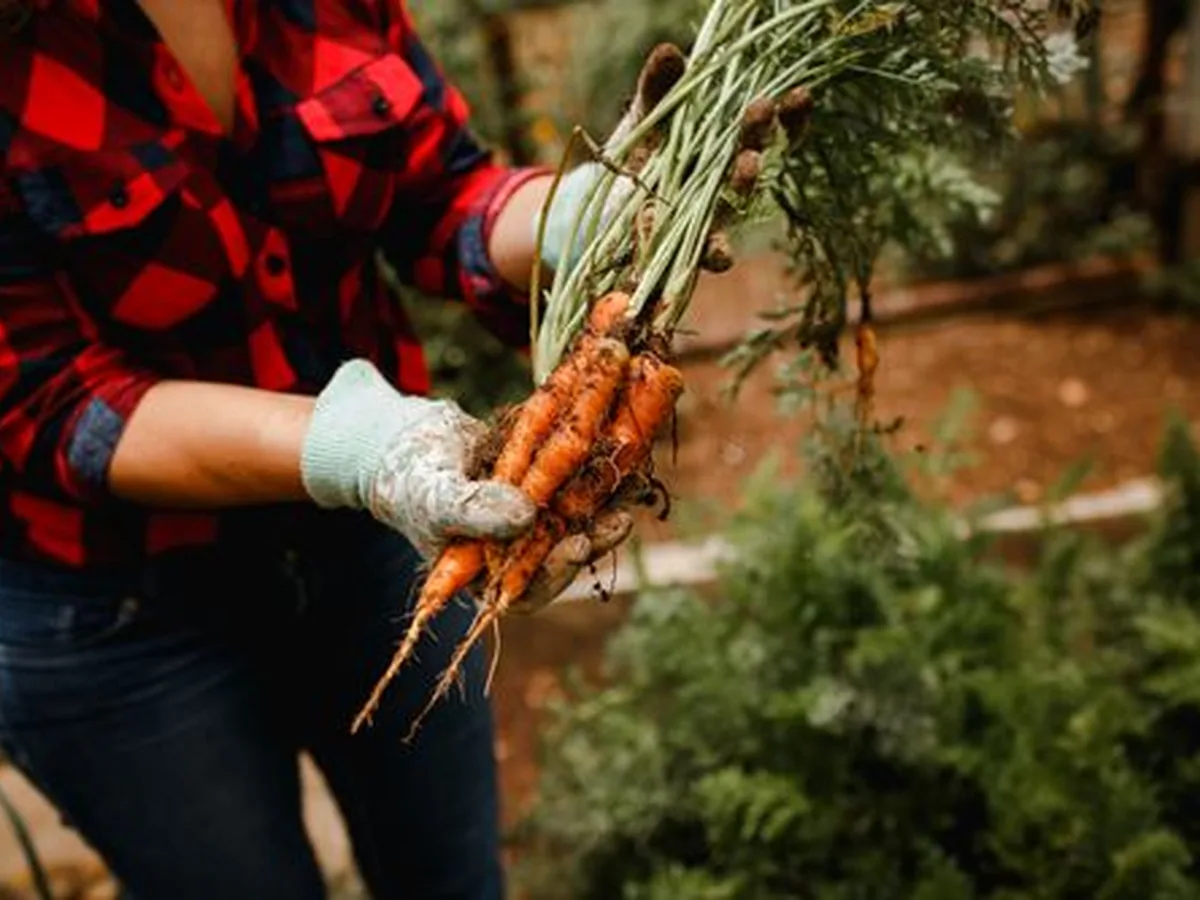
Carrots are a satisfying crop for home gardeners because they need little attention once sown, store well, and taste noticeably sweeter when freshly pulled than after long storage. They also suit both garden beds and containers, which makes them a good choice for small gardens. The main requirements are loose, stone-free soil, steady moisture, and patience — carrots take time to grow, and pulling them too early is a common beginner disappointment.
This guide covers choosing varieties, preparing soil for beds and pots, sowing, thinning, watering, and harvesting carrots, along with the problems most likely to affect them.
Choosing a Variety
Carrot varieties differ mainly in length, shape, and time to maturity. Long varieties need deep, loose soil and suit garden beds with good depth. Short, round, or stump-rooted varieties — such as Parisian types — suit shallow soil and containers, and are a safer choice if your soil is heavy or your pots are not very deep.
For beginners, a reliable maincrop variety for beds and a short variety for containers covers most situations. Early varieties mature faster and are useful for an early harvest, while maincrop varieties take longer but store better. Read the packet for expected days to maturity and recommended spacing, as this varies more than many gardeners expect.
Colour is not just cosmetic. Orange carrots are the most familiar, but purple, yellow, and white varieties grow in the same way and can be a fun addition for children or for salads. Flavour differences between colours are subtle; growing conditions matter more than colour for sweetness.
Soil Preparation: The Key to Straight Carrots
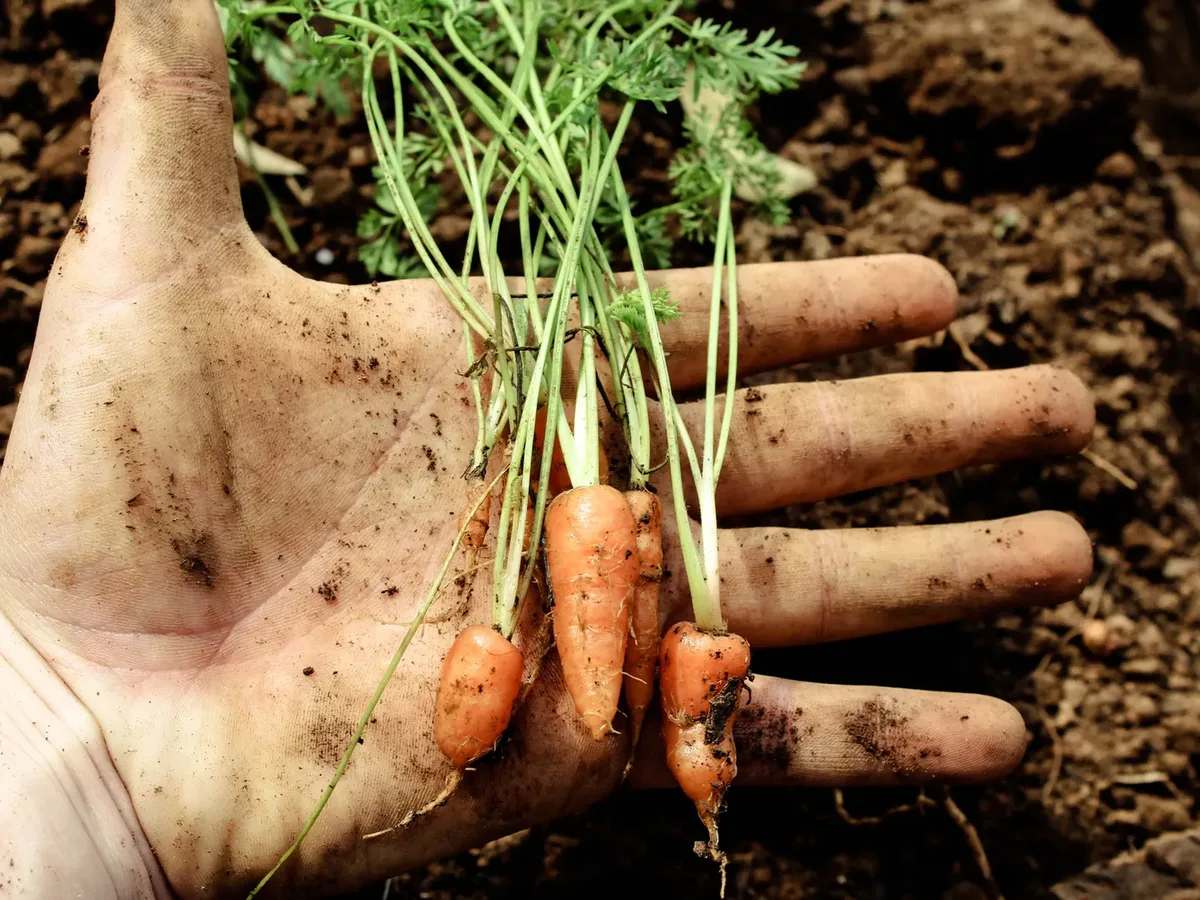
Carrots grow straight and well in loose, crumbly soil free of stones, clods, and fresh manure. Stones and compacted lumps cause roots to fork or bend, which does not affect flavour but makes peeling and cooking less convenient. Fresh manure can also cause forking and should not be dug in just before sowing carrots. Use well-rotted compost from a previous season instead, or no compost at all if the soil is already fertile.
For garden beds, fork the soil to at least 30 centimetres deep, breaking up clods and removing stones. Rake the surface to a fine, level tilth — a crumbly texture that lets tiny seeds germinate evenly. If your soil is heavy clay, growing carrots in a raised bed or container filled with a sandy, compost-rich mix will give better results than fighting the clay directly.
For containers, use a pot at least 30 centimetres deep for short varieties and deeper for long ones. Fill with a mix of potting compost and sharp sand or perlite to keep it loose and free-draining. Avoid garden soil in pots, as it compacts and holds too much water. Raised bed gardening basics covers how to build and fill a bed that suits root crops as well as leafy vegetables.
Sowing Carrots
Carrots are almost always sown directly where they will grow, because transplanting disturbs the root and causes forking. Sow in rows about 30 centimetres apart, or scatter in a block in a container. Sow seeds thinly, about 1 centimetre deep, and cover lightly with fine soil or compost. Water gently so seeds are not washed away.
Germination can be slow — often two to three weeks — and soil must stay moist during that period. Covering the row with a board, hessian, or fleece helps retain moisture and can speed germination, but check regularly and remove the cover as soon as seedlings appear. In hot weather, sowing in the cooler part of the day and watering lightly each day until germination helps.
Sow little and often for a steady supply. A row every three to four weeks during the growing season gives a succession of harvests rather than a glut all at once. In mild climates, late sowings can provide carrots into autumn and winter. In Australia and the southern hemisphere, sowing times are reversed compared with northern hemisphere guides, so follow local advice for your area.
Thinning and Aftercare
Thinning is essential and often neglected. Carrot seedlings sown thinly still emerge thickly, and crowded plants produce thin, stunted roots. Thin in stages: first to about 3 centimetres apart when seedlings are a few centimetres tall, then to 5 to 8 centimetres apart for full-sized roots, depending on variety. Thin in the evening, when carrot fly is less active, and water afterwards to settle remaining plants.
Keep the bed weed-free, as weeds compete for water and nutrients and can shade young carrots. Hand-weed carefully, as hoeing close to the row can damage shallow roots. Mulching between rows with straw or compost helps suppress weeds and retain moisture, but keep mulch away from the immediate row while seedlings are very small.
Water consistently. Carrots need evenly moist soil, especially while roots are swelling. Irregular watering can cause splitting or woody texture. Water deeply rather than lightly, and avoid letting the soil dry out completely in hot weather. Containers need more frequent checking, as they dry faster than beds.
Carrot Fly and Other Problems
Carrot fly is the most troublesome pest for home growers. The adult fly lays eggs near carrot foliage, and larvae tunnel into roots, causing rusty discolouration and damage. The simplest protection is a physical barrier: cover the crop with fine insect mesh from sowing onwards, with the edges buried or weighed down so flies cannot get underneath. Alternatively, grow carrots in containers raised at least 60 centimetres off the ground, as the fly tends to fly low.
Other problems are usually related to soil or water. Forked roots point to stones, clods, or fresh manure. Green shoulders — where the top of the root turns green — happen when roots are exposed to light; earth up soil around the shoulders or mulch to keep them covered. Splitting is usually caused by irregular watering or by leaving roots in the ground too long after maturity.
Most carrot diseases are minor in home gardens. Good spacing, airflow, and rotation — not growing carrots in the same spot year after year — reduce disease pressure. If a crop is badly affected, remove it and improve soil conditions before sowing again.
Harvesting and Storing
Carrots are ready when they reach a useful size, which you can check by gently easing soil away from the shoulder of a root. Early varieties can be pulled young for sweet, tender carrots, while maincrop varieties can be left longer for larger roots. Harvest by loosening soil with a fork first, then pulling gently — pulling from dry, hard soil can snap roots.
For storage, twist off foliage, brush off loose soil, and store roots in a cool, dark place. In a fridge, they keep for several weeks in a bag. In mild climates, carrots can also be left in the ground and pulled as needed, provided the ground does not freeze hard. Improving garden soil naturally with compost and organic matter will help future carrot crops grow straight and sweet.
Frequently Asked Questions
How deep should soil be for carrots?
Fork garden beds to at least 30 centimetres deep and remove stones. For containers, use a pot at least 30 centimetres deep for short varieties and deeper for long ones.
Why are my carrots forked or bent?
Forking is usually caused by stones, clods, compacted soil, or fresh manure in the soil. Prepare soil to a fine, loose tilth and avoid fresh manure before sowing.
How do I stop carrot fly?
Cover crops with fine insect mesh from sowing, with edges buried or weighed down, or grow carrots in containers raised at least 60 centimetres off the ground.
Can I grow carrots in containers?
Yes. Use a deep pot, a loose mix of potting compost and sharp sand or perlite, and short or round varieties for best results in shallow containers.
When should I harvest carrots?
Harvest when roots reach a useful size, checking by easing soil away from the shoulder. Early varieties can be pulled young, while maincrop varieties can be left longer.
Conclusion
Carrots need little more than loose soil, steady moisture, and patience. Choose a variety that suits your soil depth, sow thinly and directly, thin in stages, and protect against carrot fly with mesh or raised containers.
With those basics, both beds and containers can produce sweet, straight roots for the kitchen. If you want to try another root crop, see Growing potatoes in bags and beds.