Peppers — both sweet bell peppers and hot chilli varieties — are warm-season vegetables that reward a sunny spot and a little patience. They grow well in garden beds and containers, which makes them suitable for patios and small gardens, and they produce over a long season once they get going. The main challenge for beginners is timing: peppers need warmth to germinate and grow, and planting them out too early in cool weather is the most common cause of slow, stunted plants.
This guide covers choosing sweet and hot varieties, starting plants, planting out, watering and feeding, and harvesting peppers for beginners.
Sweet Peppers and Hot Peppers: What Is the Difference?
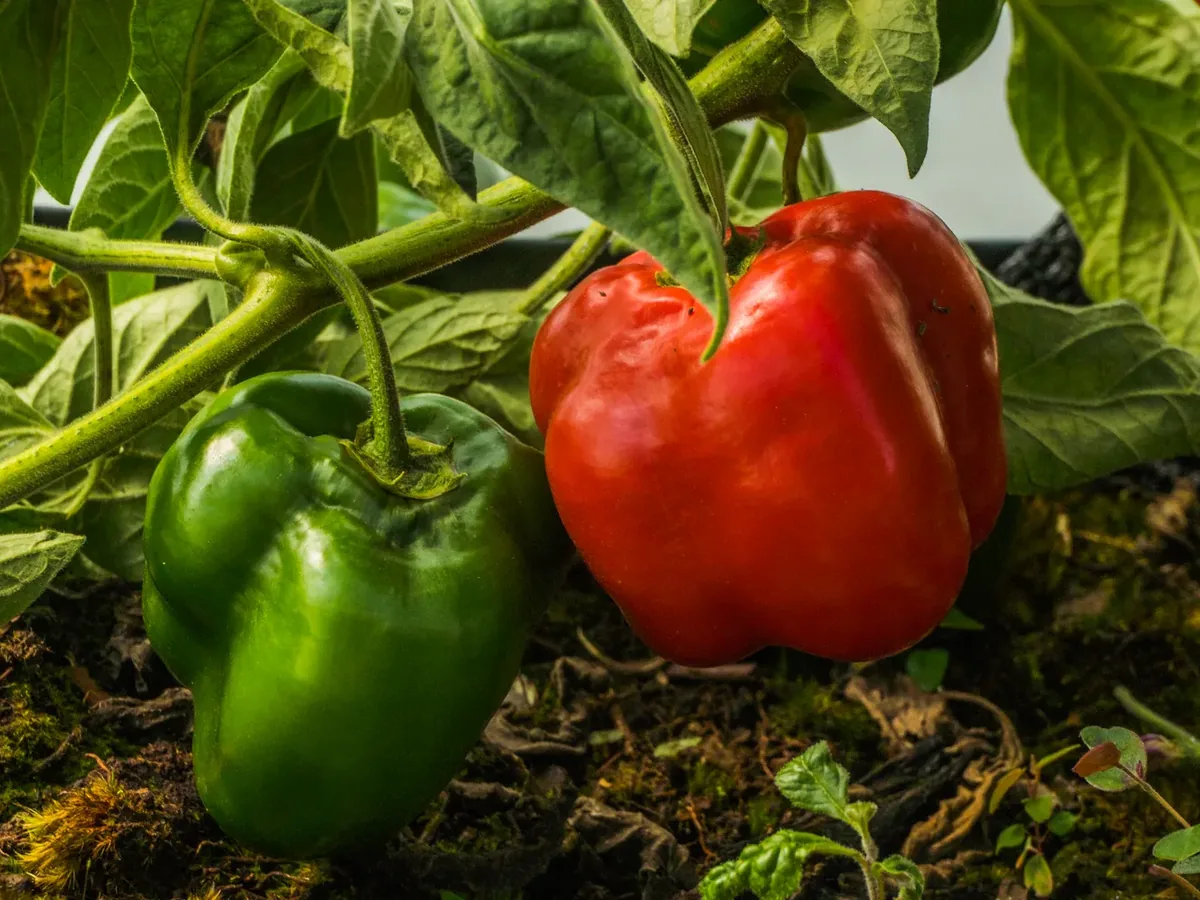
Sweet peppers, such as bell peppers, have thick, mild flesh and no heat. They are picked green for a slightly bitter, grassy flavour or left to ripen to red, yellow, or orange for a sweeter taste. Ripening takes longer, so in cooler climates green peppers are often more reliable, while red and yellow peppers need a longer warm season.
Hot peppers range from mild varieties, such as poblano and Anaheim, to very hot types, such as habanero and Scotch bonnet. Heat comes from capsaicin, concentrated mainly in the white pith and seeds inside the fruit. If you are new to hot peppers, start with a mild variety and work up — heat levels vary by variety and by growing conditions, and a variety described as mild in one garden can be hotter in another.
Both sweet and hot peppers grow in the same way and need the same conditions: full sun, warmth, well-drained fertile soil, and steady water. They can be grown side by side, though cross-pollination between varieties can affect seed saved for next year — it does not affect the flavour of this year’s fruit.
Starting Peppers: Seed or Seedling?
Peppers need a long growing season and are usually started indoors from seed, well before the last frost, or bought as seedlings. Seed germination needs warmth — around 20 to 25 degrees Celsius is ideal — and can be slow, sometimes taking two to three weeks. A propagator, a warm windowsill, or the top of a fridge can help, but avoid cold, draughty spots.
Sow seeds in small pots or trays of seed compost, cover lightly, and keep moist but not waterlogged. Once seedlings have two or three true leaves, pot them on into larger pots. Harden them off gradually before planting out — expose them to outdoor conditions for increasing periods over a week or so — so they are not shocked by wind and temperature changes.
For beginners, buying seedlings is a simpler first step. Choose sturdy, stocky plants with dark green leaves, not tall, pale, leggy ones. One or two plants of each variety is enough to start; peppers are productive and a single healthy plant can yield many fruits over a season.
Where and When to Plant Out
Peppers need full sun — at least six hours of direct sun a day — and shelter from wind. A sunny wall, a greenhouse, or a sheltered patio suits them well. In garden beds, enrich soil with compost and make sure it drains freely. In containers, use a pot at least 25 to 30 litres for a single plant, filled with good potting mix.
Plant out only after all risk of frost has passed and night temperatures are reliably warm. Peppers planted into cold soil sit still, grow slowly, and may never fully recover. In cooler climates, growing in pots that can be moved to shelter, or in a greenhouse or polytunnel, gives more reliable results. In Australia and the southern hemisphere, planting times are reversed compared with northern hemisphere guides, so follow local timing.
Space plants about 45 to 60 centimetres apart in beds, depending on variety, to allow air circulation. Plant at the same depth as in the pot — unlike tomatoes, peppers do not benefit from deep planting.
Watering, Feeding, and Support
Peppers need steady moisture, especially while fruit is forming. Water deeply at the base of the plant, keeping soil evenly moist but not waterlogged. Irregular watering can cause blossom end rot — dark patches on the bottom of fruit — and flower drop. Mulch around plants with straw or compost to hold moisture and keep soil temperature even.
Containers dry out faster than beds and may need daily watering in hot weather. Check soil moisture with a finger before watering, and avoid letting pots dry out completely, as stressed plants drop flowers and fruit.
Feed peppers once they start flowering. A balanced liquid feed, or a tomato feed, applied at the label rate every week or two during the fruiting season, is sufficient. Avoid heavy nitrogen feeding, which produces leafy growth at the expense of fruit. Compost in the soil before planting provides a good base.
Most peppers benefit from light support. A cane or short stake tied loosely to the main stem prevents plants toppling when laden with fruit, especially in wind. Bushy varieties may need no support beyond a cane, while taller varieties benefit from a cage or several canes.
Pruning and Flower Care
Peppers generally need little pruning. Remove yellowing or damaged leaves, and pinch out the growing tip of young plants if you want bushier growth, though this is optional. Some gardeners remove the first flowers on small plants to encourage stronger root and leaf growth before fruiting — this can help a weak plant, but it is not essential for healthy seedlings.
If flowers drop without setting fruit, the cause is often temperature stress — too cold at night or too hot during the day — or irregular watering. Keep conditions steady, avoid overfeeding with nitrogen, and be patient; plants often set fruit more reliably once temperatures settle.
Common Problems
Aphids are the most common pest on peppers, clustering on new growth and flower buds. A strong spray of water or encouraging beneficial insects usually keeps them in check. In greenhouses, watch for whitefly and spider mite, which thrive in hot, dry conditions; improve ventilation and humidity to reduce problems.
Blossom end rot, as with tomatoes, is linked to irregular watering and calcium uptake rather than a simple lack of calcium in the soil. Keep watering steady and mulch to hold moisture.
Sunscald — pale, papery patches on fruit exposed to strong sun after leaves are removed or damaged — can be reduced by keeping foliage intact and providing light shade in very hot climates. Do not prune heavily in hot weather.
Harvesting and Using Peppers
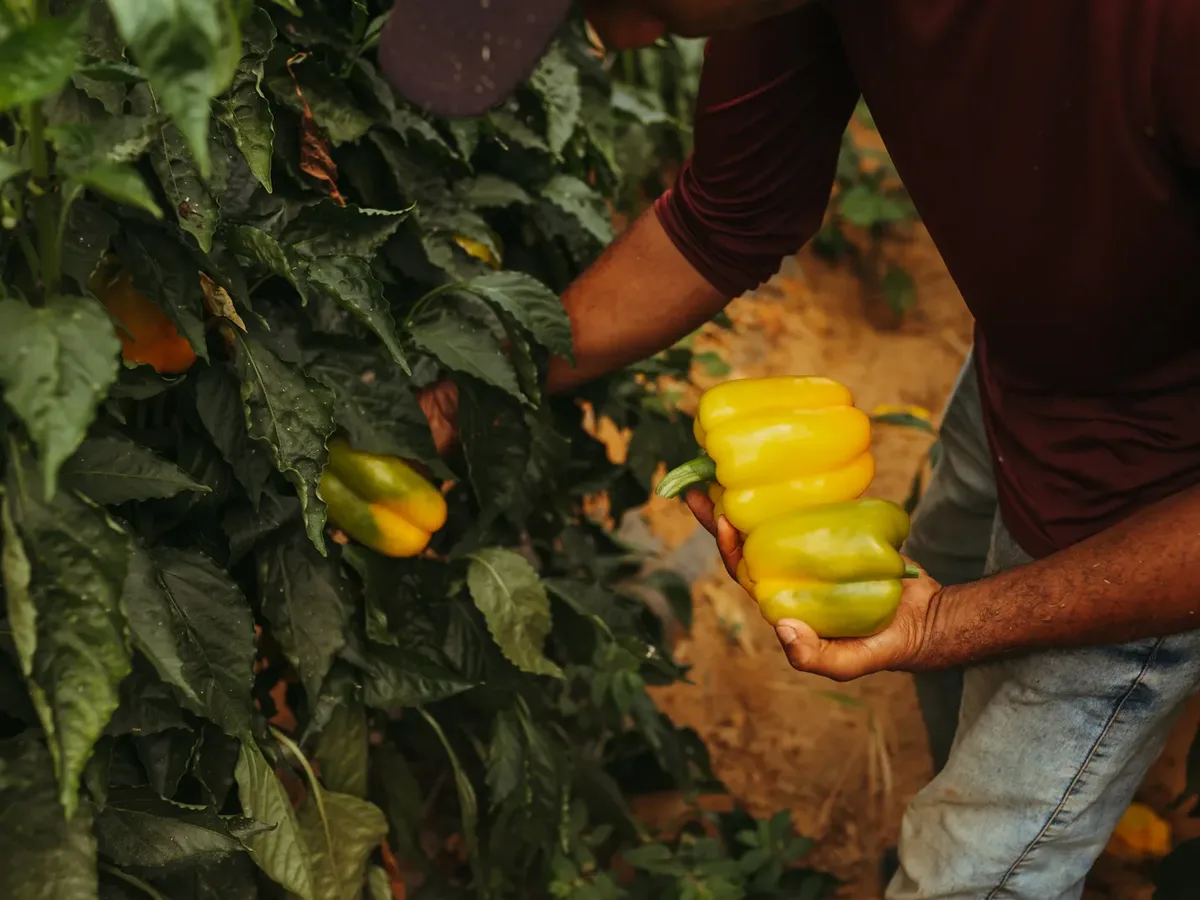
Pick sweet peppers when they reach a useful size, green or fully coloured depending on your preference. Colour change takes time, so picking some green and leaving others to ripen spreads the harvest. Hot peppers can be picked green or ripe; heat and flavour often increase as they ripen, so taste a small piece before using a new variety in cooking.
Use clean secateurs or a knife to cut fruit from the plant, leaving a short stem attached. Pulling can damage branches. Wear gloves when handling hot peppers, and avoid touching your face or eyes until you have washed your hands thoroughly.
Store peppers in the fridge for a week or two, or freeze, dry, or pickle surplus. Hot peppers dry well and can be stored for months, while sweet peppers freeze well when chopped and bagged.
Frequently Asked Questions
Do peppers need full sun?
Yes. Peppers need at least six hours of direct sun a day and shelter from wind for best fruiting.
Why are my pepper flowers dropping?
Flower drop is often caused by temperature stress, irregular watering, or heavy nitrogen feeding. Keep watering steady, avoid overfeeding, and wait for temperatures to settle.
Can I grow peppers in pots?
Yes. Use a pot of at least 25 to 30 litres for one plant, good potting mix, steady watering, and a cane for support.
Should I start peppers from seed or buy seedlings?
Both work. Seeds need warmth and a long season, so start indoors well before the last frost. Seedlings are simpler for beginners and give a faster start.
When should I pick peppers?
Pick sweet peppers green or fully coloured, depending on preference, and hot peppers green or ripe. Cut fruit with secateurs, leaving a short stem attached.
Conclusion
Peppers are a rewarding warm-season crop for beginners who can give them sun, warmth, and steady water. Start with sturdy seedlings, plant out only after frost risk has passed, and water and feed consistently through the fruiting season.
Try one sweet and one mild hot variety in your first season to learn what suits your garden. For more on warm-season growing, see Growing tomatoes at home, and for another crop that benefits from vertical support, try growing cucumbers vertically. For mulching tips, see a guide to mulching the garden.