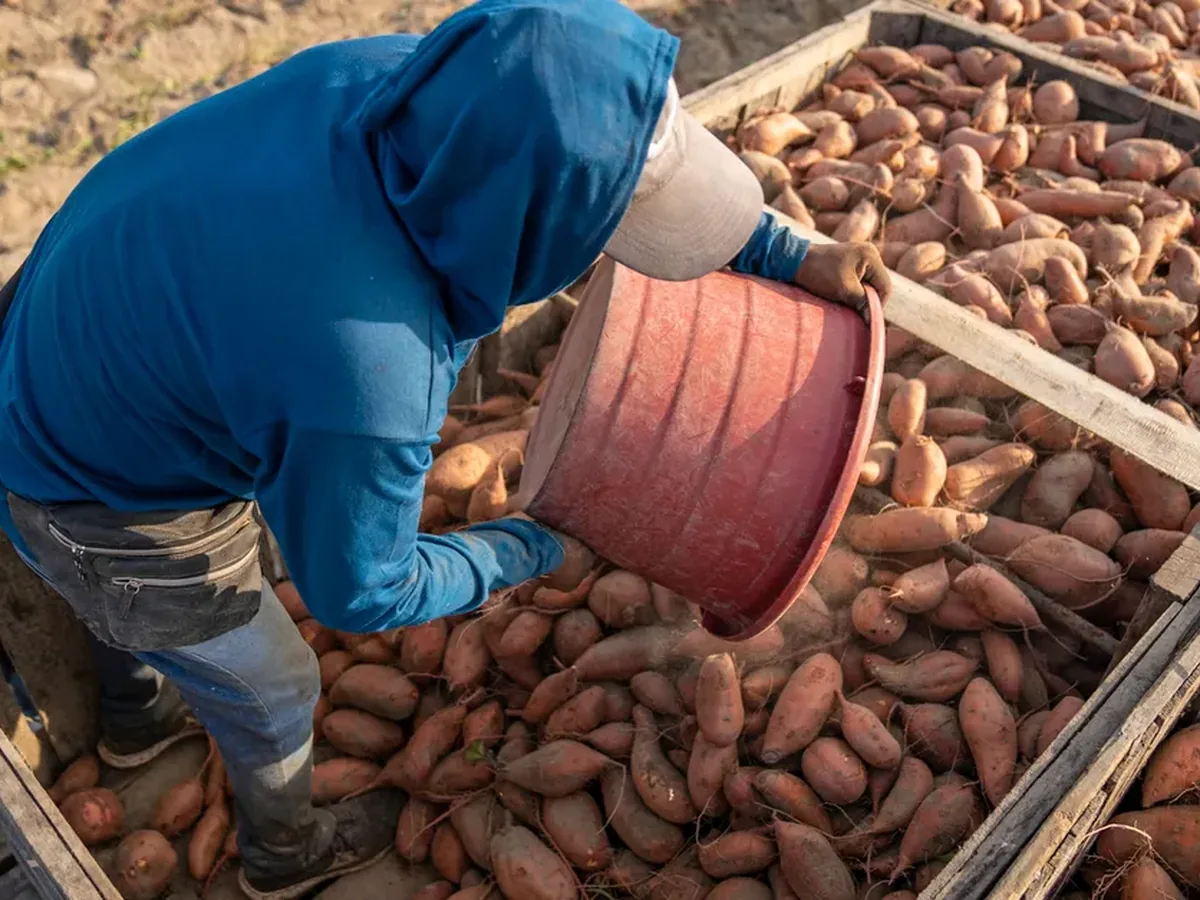
Potatoes are one of the most satisfying vegetables to grow at home. They are productive, they need little specialist equipment, and digging up your first crop — turning over soil or tipping out a bag to find potatoes you planted months earlier — is genuinely enjoyable, especially for children. Potatoes grow well in garden beds and in bags or large containers, which makes them suitable for small gardens, patios, and even balconies with enough sun.
This guide covers choosing seed potatoes, planting in beds and bags, earthing up, watering and feeding, and harvesting and storing your crop.
Choosing Seed Potatoes
Potatoes are grown from seed potatoes — small tubers, not true seeds — bought from a garden centre or supplier. Always use certified seed potatoes rather than supermarket potatoes, which may carry disease and are often treated to prevent sprouting. Certified seed is checked for disease and gives more reliable results.
Varieties fall into groups by maturity. First early varieties mature fast and are often grown for new potatoes, harvested young for salads. Second early varieties follow a few weeks later. Maincrop varieties take longest but produce larger yields and store better through winter. For beginners, one early variety for summer eating and one maincrop variety for storage covers most needs.
Before planting, seed potatoes are often chitted — placed in a light, cool, frost-free place with the end with most eyes facing up, so short, sturdy sprouts form. Chitting gives plants a head start, especially for early varieties, but it is not essential. If you chit, handle sprouts gently, as they break easily. If sprouts become long and pale, the tubers were kept too warm or too dark.
Where and When to Plant
Potatoes need full sun and well-drained, fertile soil. They tolerate a range of soils but do best in loose soil enriched with compost. Avoid planting in the same spot as potatoes, tomatoes, or other members of the potato family year after year, as this builds up soil-borne disease. Rotate crops so potatoes return to the same bed only after a few years.
Planting time depends on variety and climate. Early varieties are planted first, once soil has warmed and frost risk is easing, followed by maincrop varieties a few weeks later. In mild climates, planting can start earlier; in cold climates, wait until soil is workable and frost risk is lower. In Australia and the southern hemisphere, planting times are reversed compared with northern hemisphere guides, so follow local advice for your area.
If a late frost is forecast after shoots emerge, cover them with fleece or earth them up — both protect young growth from frost damage. Potatoes can recover from light frost damage, but repeated frosts set plants back.
Growing Potatoes in Garden Beds
In a bed, dig a trench or individual holes about 10 to 15 centimetres deep. Space seed potatoes about 30 centimetres apart for early varieties and 35 to 40 centimetres apart for maincrop varieties, with rows about 60 to 75 centimetres apart. Place tubers with sprouts facing up, cover with soil, and water if the soil is dry.
As shoots grow to about 20 centimetres tall, earth them up: draw soil from between rows up around the stems, burying the lower stems and leaving just the top leaves showing. Repeat earthing up two or three times through the season. Earthing up serves several purposes: it protects tubers from light, which turns them green and makes them unsafe to eat; it encourages more tubers to form along buried stems; and it helps suppress weeds.
Keep the bed weed-free and watered, especially while tubers are forming. Potatoes need steady moisture — dry soil during tuber formation leads to small, misshapen tubers and can increase scab, a cosmetic skin condition. Mulching between rows with straw or compost helps retain moisture and reduces watering needs.
Growing Potatoes in Bags and Containers
Growing in bags is ideal for small spaces and for gardeners who want an easy harvest without digging. Use a large potato grow bag, a sturdy bin bag with drainage holes, a large pot, or even an old dustbin with holes drilled in the base. A container of at least 40 litres suits three to four seed potatoes; smaller pots suit one or two.
To plant in a bag:
- Put about 15 centimetres of good compost or a compost and soil mix in the bottom of the bag.
- Place seed potatoes on the surface, sprouts up, spaced evenly.
- Cover with another 10 to 15 centimetres of compost.
- Water well and place the bag in a sunny, sheltered spot.
As shoots grow, add more compost in layers — the bag equivalent of earthing up — until the bag is nearly full. This encourages tubers to form along the buried stems and keeps developing potatoes covered from light. Roll down the sides of a flexible grow bag at planting time and roll them up as you add compost, which makes the process easier.
Bags dry out faster than beds, so check moisture regularly and water deeply, especially in hot weather. Feed with a balanced liquid feed or tomato feed once plants are flowering, as nutrients in a bag are limited. At harvest, simply tip the bag out onto a sheet or into a wheelbarrow and collect the potatoes — no digging required, and no tubers left hidden in the soil.
Watering and Feeding
Potatoes need steady water from planting until harvest, with the most critical period being when tubers are forming and swelling. Dry soil at this stage reduces yield and increases scab and misshapen tubers. Water deeply at the base of plants, aiming for evenly moist soil. In beds, a thorough watering once or twice a week in dry weather is better than light daily sprinkling. In bags, check daily in hot weather, as bags dry quickly.
Feed potatoes lightly. Compost worked into the soil before planting provides a good base. In beds, a balanced fertiliser at planting time is usually enough. In bags, where nutrients are limited, a liquid feed once plants are flowering helps sustain growth until harvest. Avoid heavy nitrogen feeding late in the season, as this encourages leafy growth at the expense of tubers.
Common Problems
Blight is the most serious potato disease, causing dark patches on leaves and stems in warm, humid weather and rotting tubers. It spreads quickly, so remove affected foliage promptly and avoid composting diseased material. Choose blight-resistant varieties if blight is common in your area, space plants for airflow, and avoid wetting foliage when watering.
Slugs can damage tubers, especially in damp soil. Harvest promptly once foliage dies back, rather than leaving tubers in wet soil for weeks. Wireworm and other soil pests are less common in home gardens but can be reduced by rotation and by keeping beds weed-free.
Green potatoes are unsafe to eat — light exposure causes solanine to form, which is bitter and toxic in large amounts. Earth up regularly and keep tubers covered, and discard any green tubers or cut away green parts generously. Store potatoes in the dark to prevent greening after harvest.
Harvesting and Storing
Early varieties are usually ready when flowers fade or foliage starts to yellow, roughly 10 to 12 weeks after planting, though timing varies by variety and climate. Maincrop varieties take longer, often until foliage dies back naturally. To check, gently dig around a plant and feel for tubers of a useful size before harvesting the whole crop.
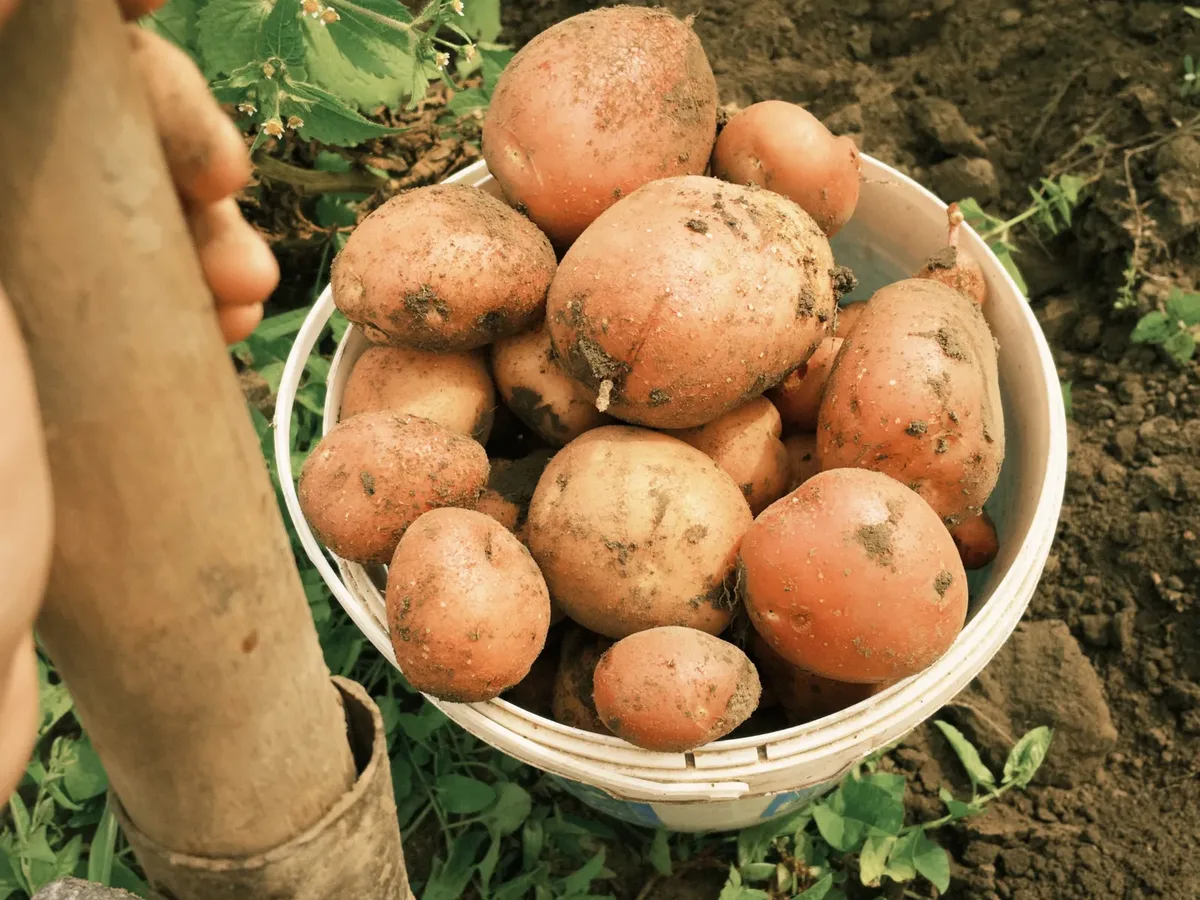
For beds, lift potatoes with a fork, working carefully to avoid spearing tubers. Let them dry on the surface for a few hours, then brush off loose soil. For bags, tip the bag out and collect tubers by hand.
Store potatoes in a cool, dark, well-ventilated place, in paper sacks or boxes rather than plastic bags, which trap moisture. Early potatoes are best eaten fresh and do not store as well as maincrop varieties, which can keep for months if stored cool and dark. Check stored potatoes regularly and remove any that are soft or sprouting heavily.
Frequently Asked Questions
Can I plant supermarket potatoes?
It is not recommended. Supermarket potatoes may carry disease and are often treated to prevent sprouting. Use certified seed potatoes for reliable, disease-checked results.
How many seed potatoes per bag?
A container of at least 40 litres suits three to four seed potatoes. Smaller pots suit one or two.
What is earthing up?
Earthing up means drawing soil up around potato stems as they grow, burying lower stems and leaving top leaves showing. It protects tubers from light, encourages more tubers to form, and suppresses weeds.
When should I harvest potatoes?
Early varieties are usually ready when flowers fade or foliage yellows, about 10 to 12 weeks after planting. Maincrop varieties are ready when foliage dies back naturally.
Why are some potatoes green?
Greening is caused by light exposure, which produces solanine. Earth up regularly, keep tubers covered, and store potatoes in the dark. Discard green tubers or cut away green parts generously.
Conclusion
Potatoes are productive, forgiving, and fun to grow, whether in a garden bed or a bag on a patio. Choose certified seed potatoes, plant in sunny, fertile soil, earth up as shoots grow, and water steadily while tubers form.
With those basics, even a small space can produce a satisfying harvest. If you are new to vegetable growing, see Starting a vegetable garden for beginners, and for more on building healthy soil, see Improving garden soil naturally. For ongoing care through the year, use a seasonal garden care checklist.