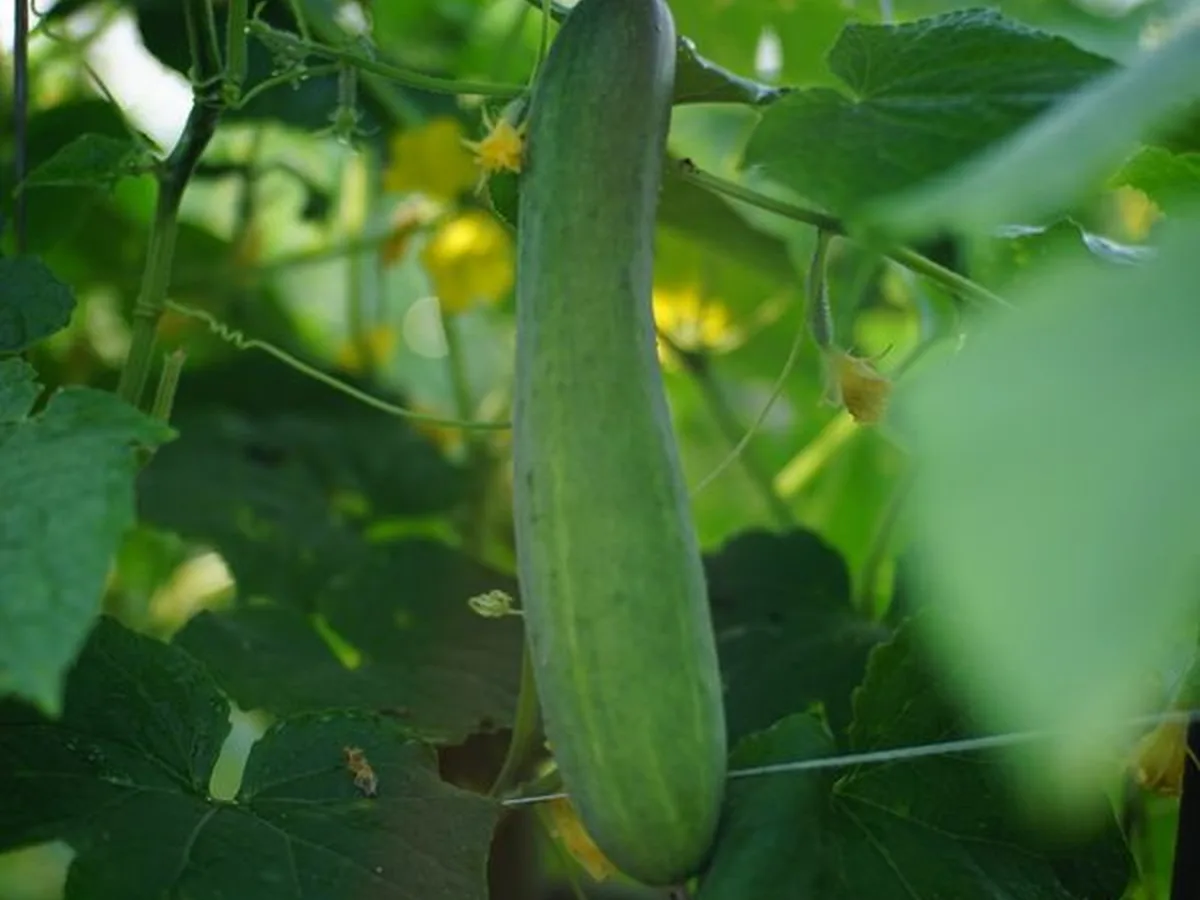
Cucumbers are vigorous, fast-growing plants that can quickly take over a small garden if left to sprawl on the ground. Growing them vertically — up a trellis, fence, netting, or arch — solves that problem and brings several benefits: leaves dry faster after rain, fruit stays cleaner and straighter, slugs have less access, and harvesting is easier because cucumbers hang where you can see them. Vertical growing also frees ground space for other crops, which makes it ideal for small gardens, patios, and raised beds.
This guide covers choosing varieties for vertical growing, building a support, planting, training, watering, and harvesting cucumbers in small spaces.
Why Grow Cucumbers Vertically?
A cucumber plant grown flat on the ground can spread over several square metres, shading neighbouring plants and producing fruit that sits on damp soil, where it is prone to rotting, slug damage, and uneven colouring. Grown vertically, the same plant uses a fraction of the ground area and produces cleaner, straighter fruit that is easier to spot and pick.
Vertical growing also improves air circulation around leaves, which reduces disease pressure in humid weather. Powdery mildew, a common cucumber problem, spreads less quickly when leaves are not crowded together on damp ground. Finally, vertical plants are easier to inspect for pests and to water at the base without wetting foliage.
Vertical plants need a strong support and regular training, as a flimsy trellis can collapse under a laden plant in wind.
Choosing Varieties for Vertical Growing
Most cucumber varieties will climb if given support, but some suit vertical growing better than others. Look for varieties described as suitable for trellis or greenhouse growing, or for small gardens. Shorter, smoother varieties tend to hang well and stay straight, while very long varieties can bend or snap if not supported.
There are two broad types: outdoor, or ridge, cucumbers, which are hardier and often have rougher skin, and indoor or greenhouse cucumbers, which are smoother and longer but need more warmth and protection. In cooler climates, greenhouse types grown in a sheltered spot, a cold frame, or a greenhouse give more reliable results. In warm climates, outdoor varieties thrive on an open trellis.
Some varieties are labelled all-female, meaning they produce mainly female flowers and set fruit without pollination. These are useful for greenhouse growing, where pollinators may be scarce, and they avoid the bitter fruit that can result from poor pollination. For beginners, an all-female variety removes one variable from the equation.
Building a Strong Support
A support must be tall enough, strong enough, and stable enough for a plant that can reach two metres or more. Options include:
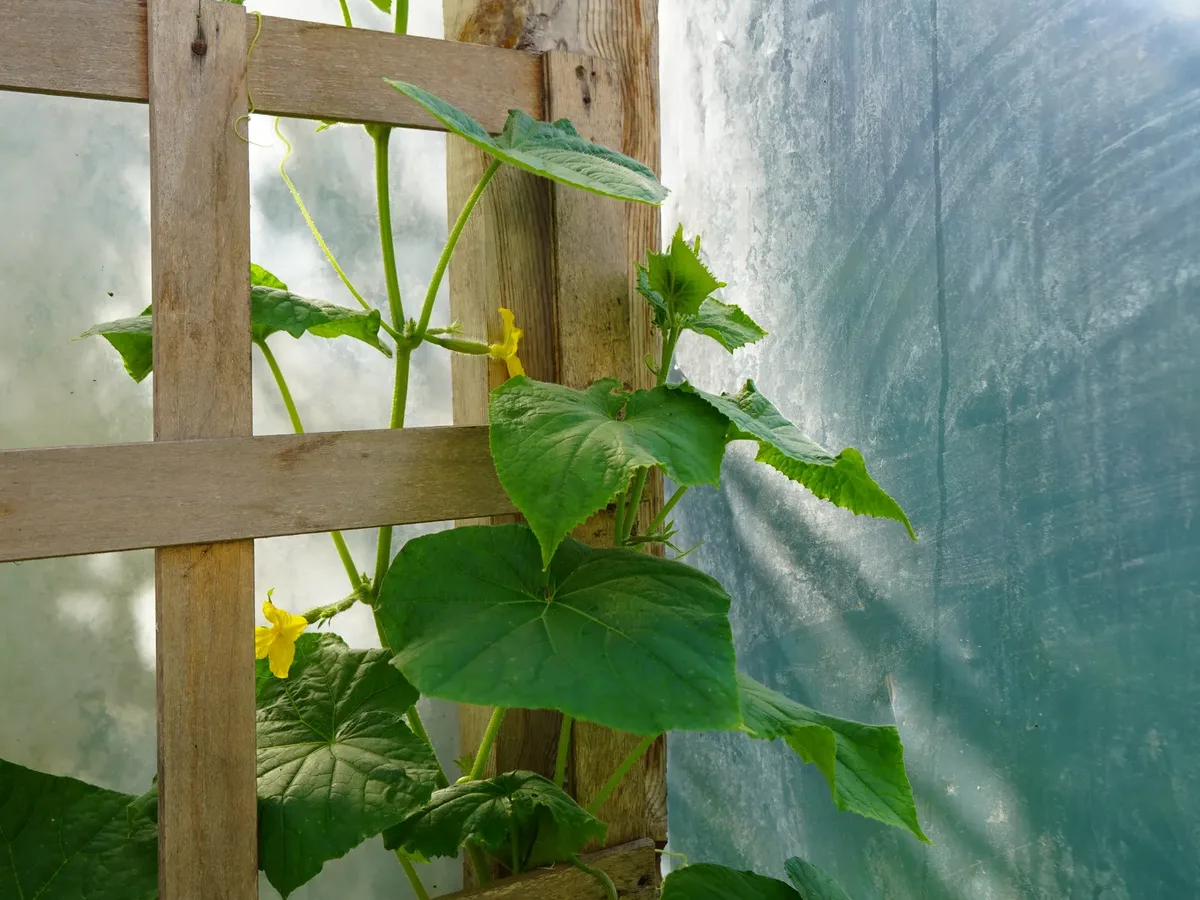
- Trellis panels: Fixed to a wall, fence, or posts. Choose a panel with openings large enough to thread stems through and strong enough to hold fruit weight.
- Netting on posts: Plastic or string netting stretched between sturdy posts. Cheap and effective, and easy to replace each year.
- A-frame: Two trellis panels leaning together, giving plants two sides to climb and shade underneath for lettuce or herbs.
- Arch or tunnel: Attractive over a path, and useful for hanging fruit. Needs strong posts anchored firmly in the ground.
- String lines: Vertical strings from an overhead wire or frame down to the plant base, as used in greenhouses. Plants are wound around the string as they grow.
Whatever you choose, install it before planting so you do not damage roots later. Anchor posts firmly — a post that leans in wind will pull plants with it. For containers on a patio, a trellis fixed to the pot or to a wall works well, provided the pot is heavy enough not to topple. A large, heavy pot is essential for a tall cucumber plant.
Planting Cucumbers
Cucumbers are warm-season plants, damaged by frost and slowed by cold soil. Start seeds indoors in individual pots several weeks before the last expected frost, or buy seedlings. Sow seeds on their side, about 2 centimetres deep, in warm conditions — germination is faster and more reliable above 20 degrees Celsius.
Plant out only after frost risk has passed and nights are reliably warm. Harden seedlings off gradually over a week. In garden beds, enrich soil with compost and plant at the base of the support, about 45 to 60 centimetres apart. In containers, use a pot of at least 30 litres for a single plant, filled with good potting mix, and place the trellis behind or above the pot.
Water thoroughly after planting and mulch around the base with straw or compost, keeping mulch away from the stem. In Australia and the southern hemisphere, planting times are reversed compared with northern hemisphere guides, so follow local timing for your region.
Training Plants Up the Support
Cucumbers climb using tendrils, but they often need a little help to find the support. When stems are long enough to reach the trellis or netting, gently guide them onto it and tie loosely with soft twine if needed. Check weekly and guide new growth onto the support, spreading stems evenly so leaves are not crowded together.
As fruit develops, check that it is hanging freely and not trapped between stems or netting, which can cause misshapen fruit. Very long fruit may need a small sling of fabric or netting for support, though most varieties hang well without extra help.
Pruning is optional but can help in small spaces. Removing some side shoots and lower leaves improves airflow and directs energy into main stems and fruit. Do not prune heavily, as leaves feed the fruit; remove only what is needed for airflow and access.
Watering and Feeding
Cucumbers are thirsty plants with large leaves and fast growth. They need consistently moist soil, especially while fruit is swelling. Irregular watering causes bitter, misshapen fruit and can lead to flower drop. Water deeply at the base of the plant, preferably in the morning, and avoid wetting leaves, which encourages disease.
Containers dry out faster than beds and may need daily watering in hot weather, sometimes twice a day in very hot, windy conditions. Mulch helps retain moisture, but check soil moisture regularly — mulch can hide dry soil underneath.
Feed cucumbers once they start flowering and setting fruit. A balanced liquid feed or tomato feed, applied at the label rate every week or two, is sufficient. Compost in the soil before planting provides a good base, and a light top-dressing of compost during the season helps too. Watering the garden efficiently covers techniques for keeping thirsty crops like cucumbers consistently watered without waste.
Common Problems
Powdery mildew is the most common disease, appearing as white powdery patches on leaves, especially in humid, crowded conditions. Improve airflow, water at the base, and remove affected leaves promptly. Some varieties are bred for mildew resistance, which is worth considering if mildew is a recurring problem in your garden.
Bitter fruit is often caused by stress — irregular watering, cold nights, or poor pollination. Keep watering steady, provide shelter from cold wind, and choose all-female or well-pollinated varieties if bitterness is a recurring issue. Peeling and removing the ends can reduce bitterness in fruit that is already bitter.
Slugs and snails can damage young plants and low fruit, though vertical growing reduces their access. Check plants at dusk, use barriers, and keep the area tidy.
Poor fruit set can be caused by lack of pollination, especially in greenhouses or very sheltered spots. If you grow a variety that needs pollination, ensure pollinators can reach flowers, or hand-pollinate by transferring pollen from male to female flowers with a small brush. Female flowers are recognisable by the tiny cucumber behind the flower.
Harvesting Cucumbers
Pick cucumbers regularly, as soon as they reach a useful size for the variety. Regular picking encourages the plant to keep producing, while leaving large, overripe fruit on the plant slows production and can make remaining fruit bitter. Cut fruit with secateurs or a knife, leaving a short stem attached, rather than pulling, which can damage the vine.
Use cucumbers promptly for the best flavour and texture. They keep in the fridge for a few days, and surplus can be pickled or made into relish. Small cucumbers picked young are often sweeter and less seedy than large, overgrown ones.
Frequently Asked Questions
How tall should a cucumber trellis be?
A trellis of at least 1.5 to 2 metres tall suits most cucumber varieties. Taller supports give plants room to grow without crowding, but must be firmly anchored.
Can I grow cucumbers in pots vertically?
Yes. Use a large, heavy pot of at least 30 litres for one plant, a trellis fixed to the pot or a wall, and water regularly, as pots dry quickly.
Why are my cucumbers bitter?
Bitterness is often caused by stress, especially irregular watering, cold nights, or poor pollination. Water steadily, provide shelter, and choose all-female varieties if bitterness recurs.
Do cucumbers need pollination?
Most outdoor varieties need pollination by insects, while all-female varieties set fruit without it. In greenhouses, ensure pollinators can reach flowers or hand-pollinate.
How often should I water cucumbers?
Keep soil consistently moist, watering deeply at the base. Containers in hot weather may need daily watering, sometimes twice a day.
Conclusion
Growing cucumbers vertically is a practical solution for small gardens: it saves space, keeps fruit clean and straight, improves airflow, and makes harvesting easier. Choose a variety suited to your climate, build a strong support before planting, and train, water, and feed plants steadily through the season.
Start with one plant on a trellis or netting and learn how it performs in your garden. If you want another vertical crop to try, see Tomatoes grown at home, or for another warm-season vegetable, try Peppers for beginners.