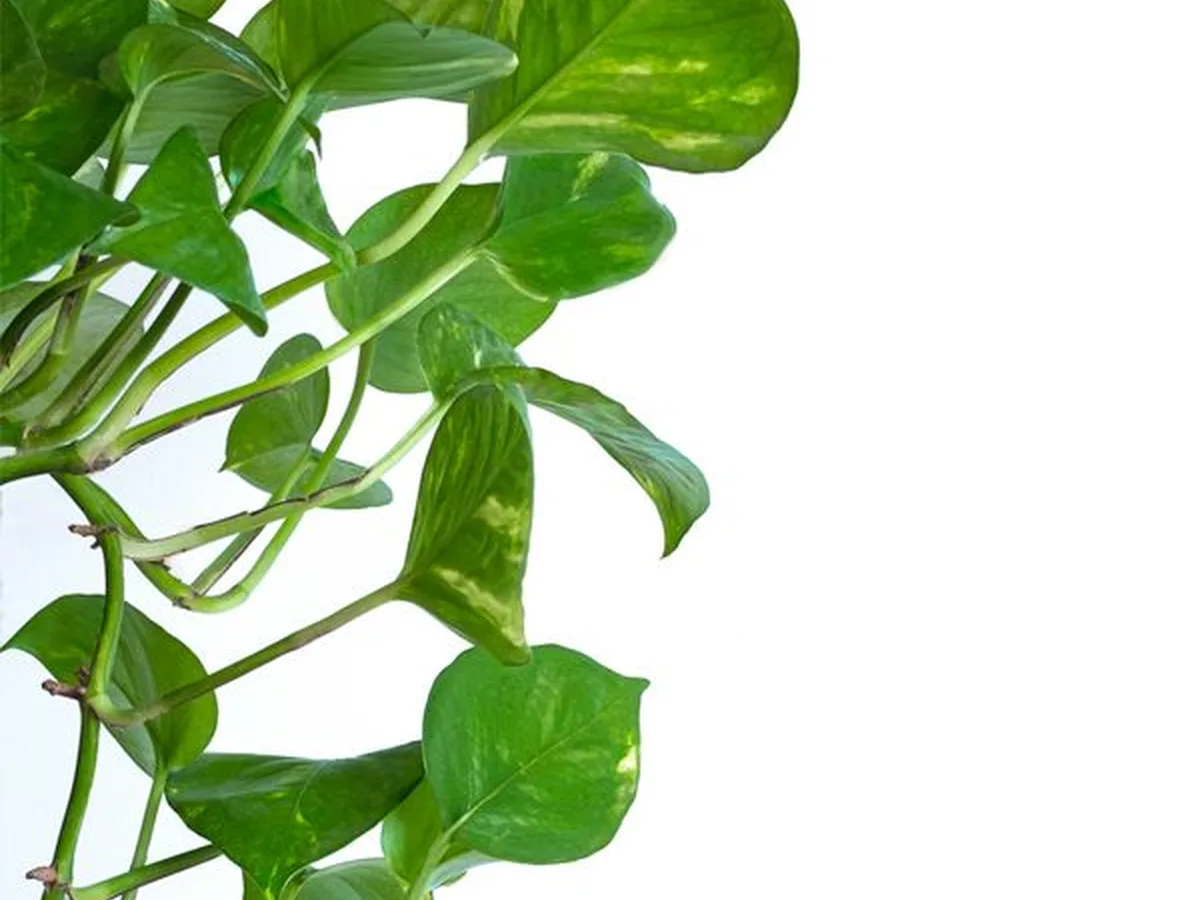
Pothos is often the plant people recommend when someone says they cannot keep anything alive, and the recommendation is well earned. It grows fast, trails beautifully, tolerates a range of light levels, forgives irregular watering, and can be propagated from cuttings in a glass of water on a windowsill. Botanically known as Epipremnum aureum, it is also sold as devil’s ivy — a nod to how hard it is to kill.
Native to tropical forests, pothos in the wild climbs trees using aerial roots. Indoors, it is usually grown trailing from a hanging pot or high shelf, or trained up a moss pole or trellis. Its heart-shaped leaves come in several varieties: plain green Jade, golden-splashed Golden Pothos, creamy-marbled Marble Queen, and silvery-splashed Satin Pothos, among others. Care is broadly the same across varieties, with variegated types needing a little more light to keep their markings.
Light
Pothos is adaptable. It grows best in bright, indirect light, where growth is fast and variegation stays vivid. It also copes well in medium and low light, which is why it appears on almost every low-light plant list, including our guide to low-light indoor plants for beginners.
In low light, growth slows and variegated varieties tend to produce greener leaves, because the plant produces more chlorophyll to capture what light is available. That is a normal adjustment, not a sign of disease. If you want to keep the marbling strong, move the plant to a brighter spot — still out of harsh direct sun, which can scorch leaves, especially variegated ones.
Long, bare stretches of stem with sparse leaves — sometimes called leggy growth — usually mean the plant wants more light, or that it has simply outgrown its current shape and would benefit from pruning. A move closer to the window, plus a trim, usually restores fuller growth.
Water
Water pothos when the top few centimetres of soil feel dry. It tolerates a missed watering better than many plants, and its leaves droop visibly when thirsty, then recover quickly after a drink — a helpful signal for beginners. What it does not tolerate is soil that stays soggy for long periods, which leads to yellow leaves and root rot.
Water thoroughly until it drains from the bottom, empty the saucer, and then wait until the soil dries again before watering next. The checking habit described in our guide to watering indoor plants without overwatering them is the key skill here: a finger test beats a calendar schedule every time.
Season matters. In the active growing season — spring and summer in the northern hemisphere, roughly September to March in the southern hemisphere — pothos uses water faster. In winter, growth slows and watering should slow with it.
Soil, Pot, and Feeding
Ordinary indoor potting mix with some added perlite for drainage suits pothos well. The pot must have drainage holes; pothos in a pot without them is at much higher risk of root rot. It does not mind being slightly pot-bound, and repotting every one to two years, or when roots fill the pot, is usually enough.
Feed lightly during the growing season with a diluted liquid houseplant fertiliser every four to six weeks. Pothos grows well even without much feeding, and overfeeding can cause brown leaf tips. If you see a white crust on the soil or brown tips spreading, skip the next feed and flush the soil with plain water.
Temperature-wise, pothos prefers ordinary room temperatures and dislikes cold draughts and frost. Keep it above about 10°C, away from cold windows in winter and from blasts of air-conditioning. Normal indoor humidity is fine, though it grows more lushly in slightly humid air.
Trailing, Climbing, and Pruning
How you display pothos changes how it looks. Trailing from a shelf or hanging basket, the stems cascade and the leaves stay a moderate size. Trained up a moss pole or trellis, with aerial roots gripping the support, leaves often grow larger and the plant takes on a more vertical, statement form.
Pruning keeps pothos full rather than straggly. Cut just above a leaf node — the small bump on the stem where a leaf or aerial root emerges — and the stem will usually branch from that point, producing two new growth tips. Spring is the best time for a harder prune, but light trims can be done any time the plant is growing actively.
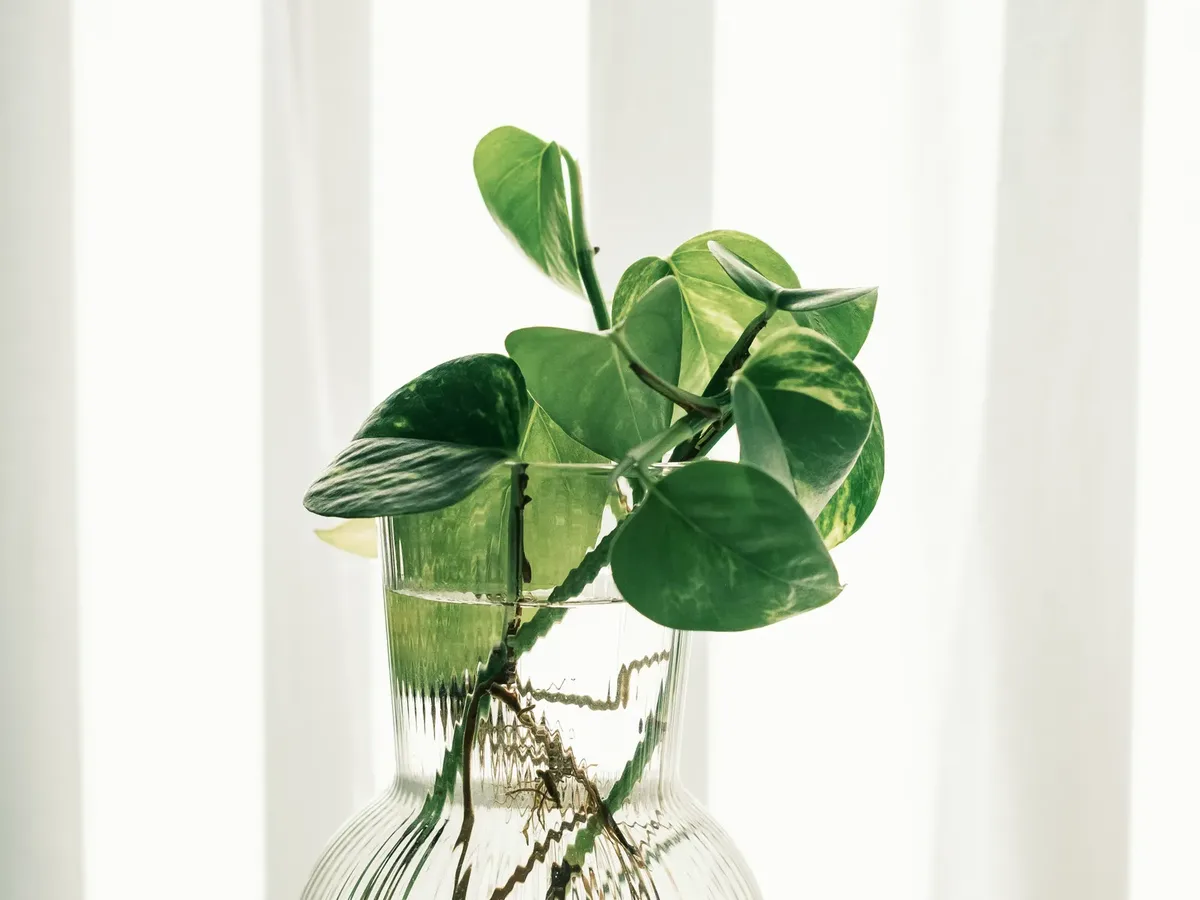
Do not throw the cuttings away. A cutting with at least one node, placed in water, will usually root within a few weeks. Once roots are a few centimetres long, pot it into soil. This is one of the easiest first propagation projects, and it means one pothos can furnish a whole shelf of plants over time.
Common Problems
- Yellow leaves: Most often overwatering, especially if several leaves yellow at once and the soil feels wet. Check drainage and let the soil dry before watering again. A single old leaf yellowing occasionally is normal.
- Brown, crispy tips: Usually underwatering, dry air, or fertiliser build-up. Check soil moisture and flush the soil if you feed regularly.
- Loss of variegation: The plant needs more light. Move it to a brighter spot out of direct sun; new growth should show more marbling, though existing green leaves will not change back.
- Leggy, bare stems: Prune back to a node to encourage branching, and give the plant more light.
- Pests: Mealybugs, spider mites, and scale insects occasionally appear, especially on stressed plants. Early treatment matters — our guide to common indoor plant pests explains what to look for and how to respond.
Pothos is generally considered toxic to pets if ingested, so check whether a plant is considered toxic to pets before placing trailing stems within reach of cats or dogs, who may be tempted to nibble dangling leaves.
Frequently Asked Questions
Is pothos really the easiest houseplant?
For most beginners, yes, or very close to it. It tolerates a wide range of light, forgives missed waterings, shows clear signals when thirsty, and propagates easily. Its main weakness is soggy soil, so good drainage matters more than any other single factor.
How fast does pothos grow?
In bright indirect light with regular watering during the growing season, pothos can grow noticeably within weeks, adding long new stems over a summer. In low light or winter, growth slows considerably. That variation is normal.
Can I grow pothos in water permanently?
Cuttings root and grow in water for months, and some people keep them in water long-term. Growth is usually slower than in soil, and the water should be changed regularly to prevent stagnation. For the fullest growth, potting a rooted cutting into soil is the better long-term option.
Why is my pothos losing its variegation?
Low light is the usual cause. The plant produces more green chlorophyll to capture limited light, and the pale markings fade. Moving it to brighter indirect light should restore variegation in new growth.
Should I mist my pothos?
Misting is not necessary. Pothos copes with normal indoor humidity. If your home is very dry in winter, grouping plants or using a humidifier helps more than occasional misting, which only raises humidity briefly.
Conclusion
Pothos combines almost everything a beginner wants: fast, visible growth, tolerance of imperfect light and watering, easy propagation, and a trailing habit that looks good on a shelf, in a hanging pot, or climbing a pole. Keep its soil from staying soggy, give it as much indirect light as you can, prune occasionally to keep it full, and it will quickly become the plant that convinces you that you can, in fact, keep houseplants alive. If you enjoy it, a monstera makes a natural next step — bolder leaves, similar care, and the same satisfying speed of growth.