Overwatering kills more indoor plants than underwatering. It sounds surprising, because a drooping plant looks thirsty, but roots sitting in constantly wet soil cannot get the air they need. They soften, rot, and stop taking up water at all — which, confusingly, can make the plant look even thirstier. Learning to water by checking the soil, rather than by the calendar, is the single most useful skill a new indoor gardener can build.
This guide covers how to tell when a plant actually needs water, how much to give, and how to set up pots and soil so that a watering mistake is less likely to turn fatal. The principles apply to most common houseplants, though individual species differ, and a few — such as succulents and peace lilies — sit at opposite ends of the moisture spectrum.
Why Overwatering Causes So Much Damage
Healthy soil contains both water and tiny air pockets. Roots need that air to respire. When soil stays saturated, air is pushed out and roots begin to suffocate. Fungi and bacteria that thrive in wet, airless conditions then attack the weakened roots. This is root rot, and by the time leaves turn yellow and drop, the damage below the surface is often advanced.
The early signs are easy to misread. Yellow leaves, soft stems, a musty smell from the soil, and mould on the surface all point to soil that is staying too wet. A plant with root rot may wilt even though the soil feels damp, because damaged roots can no longer absorb water. Adding more water at that point makes things worse, not better.
Underwatering, by contrast, usually shows as dry, crispy leaf edges, drooping that recovers quickly after watering, and soil pulling away from the edge of the pot. Most plants recover from an occasional dry spell far more readily than from weeks of wet feet.
How to Check Before You Water
Forget a fixed schedule. How quickly soil dries depends on light, temperature, humidity, pot size and material, and the plant itself. A plant in bright light in a terracotta pot in summer may need water twice as often as the same plant in a dim room in a plastic pot in winter.
Use one or more of these checks every time:
- The finger test. Push your finger 2–3 centimetres into the soil. If it feels moist at that depth, wait. If it feels dry, it is usually time to water. For succulents and cacti, wait until the soil is dry deeper down as well.
- Pot weight. Lift the pot after watering to learn its heavy, wet weight, then lift it again a few days later. A noticeably lighter pot usually means the soil has dried out.
- A wooden skewer or chopstick. Push it into the soil for a few minutes, then pull it out. Damp soil darkens the wood; dry soil leaves it mostly unchanged. This is useful for larger pots where a finger cannot reach the root zone.
- Moisture meters. A simple probe meter can help beginners build confidence, but treat its reading as one clue, not gospel. Test it in known wet and dry soil first, and cross-check with the finger test.
Checking takes less than a minute, and it prevents the most common watering error: watering soil that is already wet.
How to Water Properly
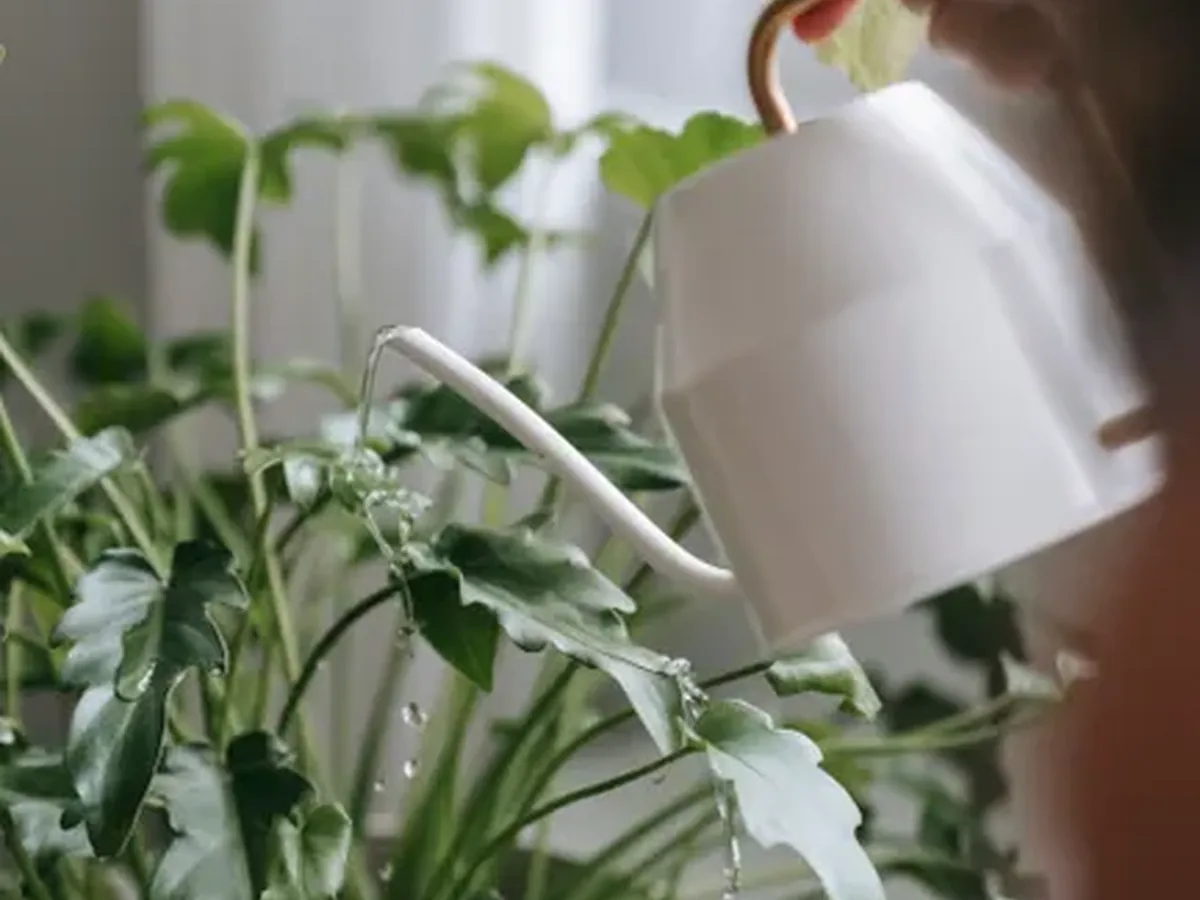
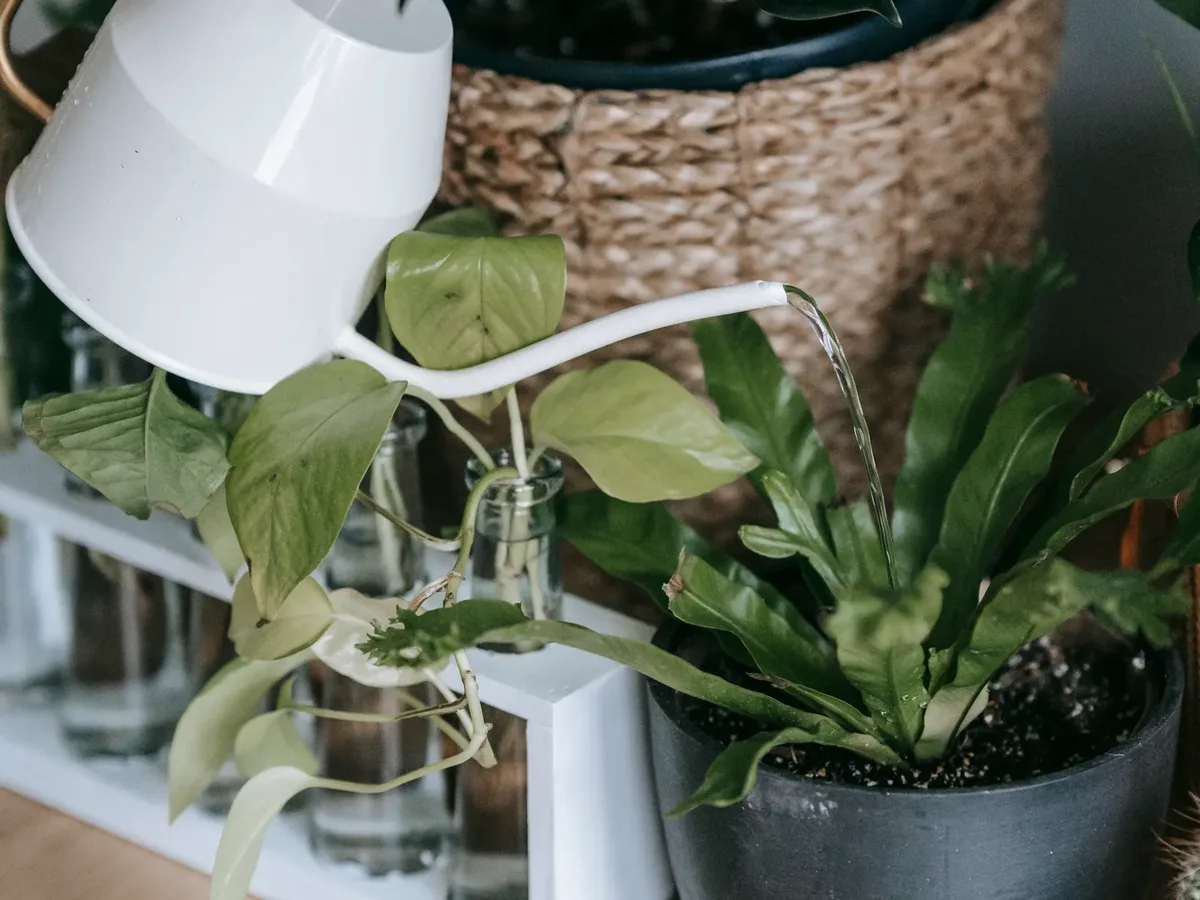
When the soil check says it is time, water thoroughly rather than giving frequent small sips. Small sips wet only the top layer, encouraging shallow roots and leaving the lower root zone dry. A thorough watering, by contrast, moistens the whole root ball.
- Water slowly and evenly over the soil surface until water begins to run from the drainage holes.
- Let the pot drain freely for 10–15 minutes. Do not leave it standing in a saucer full of water.
- Empty the saucer or cache pot afterwards, so the plant is not sitting in a puddle.
- Wait, then check the soil again in a few days before watering next.
Room-temperature water is kinder than very cold water straight from the tap, and letting tap water sit uncovered for a few hours can help chlorine dissipate, though this is not essential for most plants. If your tap water is very hard, occasional brown leaf tips can result; using collected rainwater or filtered water for sensitive plants is a reasonable option, not a requirement.
Pots, Drainage, and Soil Matter as Much as Watering
Even perfect watering habits struggle against a pot with no drainage hole. Without an escape route, excess water collects at the bottom and keeps roots wet. If you love a decorative pot without holes, use it as an outer cache pot: keep the plant in a plastic nursery pot with holes inside it, and empty any collected water after watering.
Soil mix matters too. A dense, heavy mix holds water for a long time. Most houseplants do better in a free-draining mix — standard indoor potting mix with added perlite or coarse bark to open up air spaces. Succulents and cacti need an even grittier mix. Repotting into fresh, suitable mix is also a chance to check root health; our guide to repotting indoor plants without stressing them explains the process step by step.
Pot size plays a role as well. A plant in a pot far too large for its roots sits in a large volume of soil that stays wet long after watering, because the small root system cannot use the water quickly. When repotting, choose a pot only slightly larger than the current one.
Adjusting Through the Seasons
Most indoor plants grow actively in spring and summer and slow down in autumn and winter, when light levels fall and indoor heating changes humidity. Slower growth means slower water use, so watering frequency should fall in the cooler months. That does not mean stopping altogether — centrally heated rooms can dry soil surprisingly fast — but it does mean checking more carefully and being ready to wait longer between waterings.
In Australia and the southern hemisphere, the seasons are reversed: the active growing period runs roughly from September to March, with slower growth in the cooler months from around April to August. The principle is the same either way: water according to growth and soil moisture, not according to a date on the calendar.
Humidity also affects drying. A bathroom plant in humid air will dry more slowly than the same plant beside a radiator. Grouping plants together raises local humidity slightly, which can help tropical plants, but it also means their soil dries a little more slowly.
Different Plants, Different Needs
It helps to group plants loosely by their water preferences rather than treating every plant identically.
| Group | Examples | General approach |
|---|---|---|
| Store water in leaves or roots | Snake plant, ZZ plant | Let soil dry out well between waterings |
| Average tropical houseplants | Pothos, philodendron, monstera | Water when top few centimetres are dry |
| Prefer steady moisture | Peace lily, ferns | Keep soil lightly moist, never soggy or bone dry |
| Desert plants | Cacti, many succulents | Water sparingly; soil should dry out fully between waterings |
These are starting points, not rigid rules. Light, pot, and soil all shift the timing, which is why the soil check remains more reliable than any table. If you are unsure about a particular plant, look up its care needs — for example, our monstera care guide covers that popular plant in detail — and if you are choosing plants for a dim room, our low-light indoor plants guide notes which ones tolerate less frequent watering.
Rescuing an Overwatered Plant
If you catch overwatering early, the plant can often recover. Stop watering and let the soil dry out. Improve air circulation around the plant, and make sure the pot drains freely. If the soil is sodden and smells musty, gently remove the plant from its pot, shake off the wettest mix, and trim away any roots that are black, mushy, or smell bad, keeping the firm, pale roots. Repot into fresh, free-draining mix in a clean pot, water lightly, and then wait — recovery takes weeks, not days.
Do not fertilise a stressed plant in the hope of reviving it. Fertiliser on damaged roots can burn them further. Wait until you see new, healthy growth before feeding again.
Frequently Asked Questions
How often should I water indoor plants?
As often as the soil requires, not on a fixed schedule. For many common houseplants that means roughly weekly in warm, bright conditions and less often in winter or low light, but always check the soil first. A plant in a small terracotta pot may dry in days; the same plant in a large plastic pot in a dim room may take weeks.
Should I water from the top or the bottom?
Top watering is fine for most plants and helps flush salts from the soil. Bottom watering — sitting the pot in a tray of water so the soil absorbs moisture from below — works well for plants that dislike wet leaves, but the pot must be removed before it becomes waterlogged, and the soil surface should still end up moist.
Is it better to underwater than overwater?
Generally, yes. Most houseplants tolerate a short dry spell and recover quickly once watered, while prolonged wet soil causes root rot that is much harder to reverse. When in doubt, wait a day and check again.
Why does my plant wilt even though the soil is wet?
That is a classic sign of root damage from overwatering: the roots can no longer absorb water effectively. Let the soil dry, check the roots if the problem persists, and repot into fresh mix if many roots are soft or black.
Does misting replace watering?
No. Misting raises humidity briefly around the leaves but does not water the roots, and wet leaves in still air can encourage fungal problems. Water the soil for hydration; use a humidifier or a pebble tray if you need to raise humidity.
Conclusion
Good watering is less about a schedule and more about a habit: check the soil, water thoroughly when it is dry, let the pot drain, and empty the saucer. Set the plant up for success with drainage holes, a free-draining mix, and a sensibly sized pot, and adjust through the seasons as growth and light change. Once that routine becomes second nature, many of the yellow leaves, drooping stems, and mysterious declines that frustrate beginners simply stop happening.