Finding pests on an indoor plant is unsettling, but it is also one of the most common houseplant problems, and it is usually fixable if caught early. Indoor plants have no natural predators indoors, dry heated air suits several pests well, and a stressed plant — one that is overwatered, underlit, or recently moved — is more vulnerable than a healthy one. The key is regular checking, quick isolation, and treatment matched to the pest, rather than panic spraying.
This guide covers the pests you are most likely to meet, how to tell them apart, and practical, low-risk steps to deal with them. It does not promise instant eradication: most treatments need repeating, because eggs and hidden stages survive a single application.
Check Regularly, and Isolate First
The single best pest habit is a quick weekly check. Look at the tops and undersides of leaves, along stems, in leaf joints, and at the soil surface. Pests often settle where leaves meet stems or on the undersides, where they are easy to miss from above. While watering or cleaning leaves, take an extra few seconds to look closely.
As soon as you find pests, move the affected plant away from your other plants if you can. Pests spread readily between plants that touch or stand close together, and isolation protects the rest of your collection while you treat the problem. Check neighbouring plants too, even if they look clean, and keep checking them for a few weeks afterwards.
Also consider the plant’s general care. A plant that is chronically overwatered, for example, attracts fungus gnats, while very dry air favours spider mites. Improving light, watering, and air circulation — following the principles in our guide to watering indoor plants without overwatering them — makes the plant less inviting to pests in the first place and helps it recover faster after treatment.
Common Indoor Plant Pests
Fungus Gnats
Fungus gnats are small, dark flies that hover around the soil and scatter when the pot is disturbed. The adults are mostly a nuisance, but their larvae live in the top layer of soil and feed on organic matter and fine roots, which can damage seedlings and stressed plants. They thrive in constantly damp soil.
The most effective control is to let the top few centimetres of soil dry out between waterings, which breaks the larvae’s life cycle. Yellow sticky traps catch adults and help you monitor numbers. For persistent cases, a thin top dressing of sand or fine grit makes the surface less attractive for egg-laying. Avoid keeping plants in saucers of standing water, which keeps soil wet and invites gnats.
Spider Mites
Spider mites are tiny — barely visible without magnification — and they favour warm, dry air. Signs include fine webbing on leaf undersides and stems, stippled or speckled leaves that look dusty or faded, and, in advanced cases, leaves that yellow and drop. They spread quickly in dry indoor conditions, especially in winter when heating dries the air.
Start by wiping leaves, especially undersides, with a damp cloth to remove mites and webbing, and rinse the plant gently under a shower if it tolerates it. Raising humidity around the plant — by grouping plants or using a humidifier — makes conditions less favourable. For ongoing infestations, insecticidal soap or horticultural oil, used exactly as labelled, can help, with repeat applications a week apart to catch newly hatched mites.
Mealybugs
Mealybugs look like small white cottony clusters in leaf joints, along stems, and on leaf undersides. They feed on sap, weaken the plant, and excrete sticky honeydew, which can attract sooty mould. They are common on pothos, monstera, and many other houseplants, and they hide well in crevices.
For a light infestation, dab individual clusters with a cotton swab dipped in rubbing alcohol, which dissolves their waxy coating. For heavier cases, wash the plant, prune badly infested growth, and consider insecticidal soap, following label instructions. Mealybugs can hide in pot rims and saucers, so clean those too, and keep checking for several weeks, since eggs can survive initial treatment.
Scale Insects
Scale insects appear as small, brown or tan bumps stuck to stems and leaf undersides. They barely move once settled, which makes them easy to mistake for part of the plant. Like mealybugs, they feed on sap and produce honeydew, and heavy infestations cause yellowing and leaf drop.
Small numbers can be scraped off gently with a fingernail or soft cloth. For larger infestations, wipe stems and leaves with a damp cloth, then treat with horticultural oil or insecticidal soap as labelled, repeating as directed. Pruning a heavily infested stem is sometimes kinder than trying to save it.
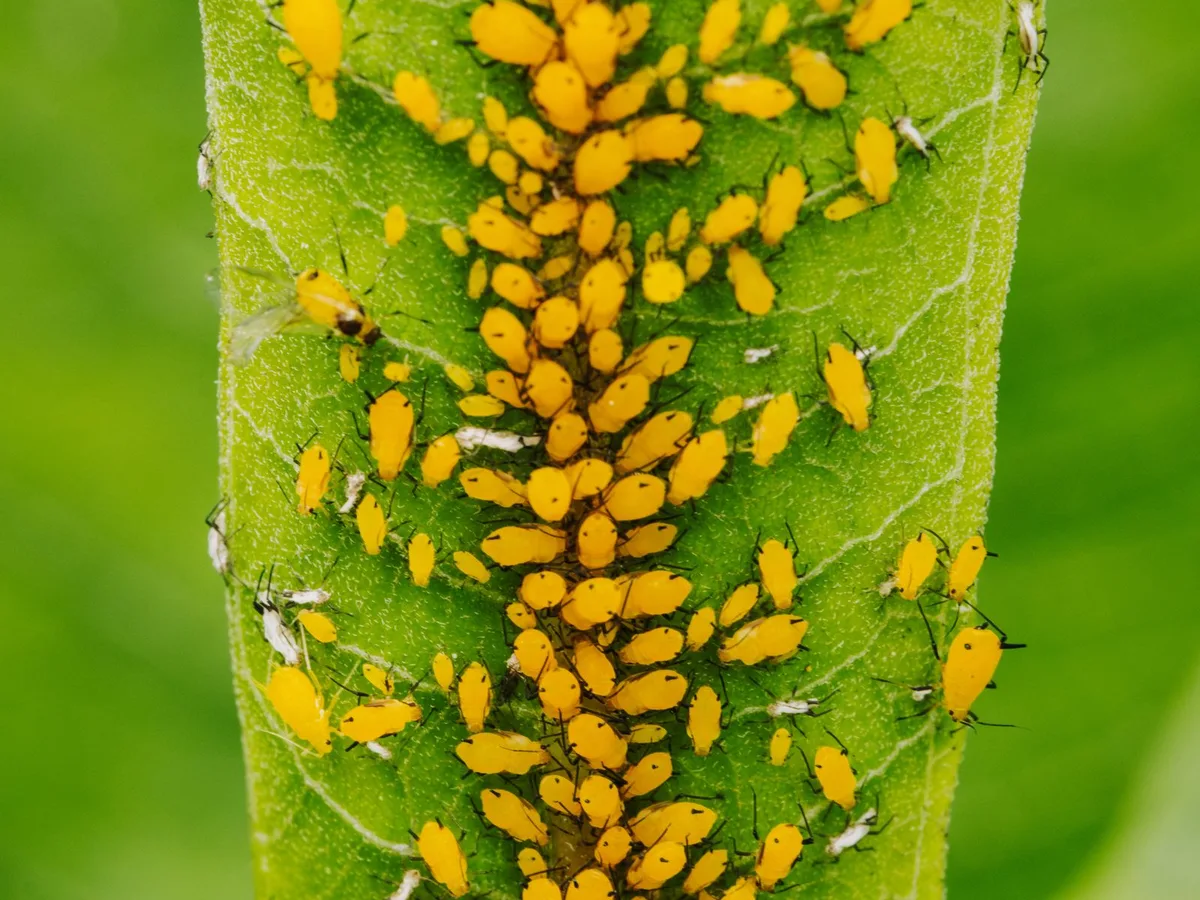
Aphids
Aphids are small, soft-bodied insects, usually green, black, or pale, that cluster on new growth, buds, and leaf undersides. They feed on sap, distort new leaves, and produce honeydew. They are less common indoors than outdoors, but they can arrive on a new plant or through an open window in summer.
A strong rinse under a shower or tap often dislodges many aphids. Follow up by wiping remaining clusters and, if needed, using insecticidal soap as labelled. Removing badly distorted new growth can also help, since aphids concentrate there.
Thrips
Thrips are slender, tiny insects that rasp leaf surfaces, leaving silvery or stippled patches, distorted new growth, and sometimes small black specks of waste. They are a particular problem for monstera and other large-leaved plants, and they can be hard to see without close inspection. Our monstera care guide notes thrips among the pests to watch for on that plant, and the same vigilance applies to other tropical houseplants, including trailing plants covered in our pothos care guide.
Thrips require persistence. Remove badly damaged leaves, wash the plant thoroughly, and treat with insecticidal soap or a product labelled for thrips, repeating applications as directed to catch successive generations. Isolation is especially important, because thrips move readily between plants.
Safe Treatment Principles
- Start with the gentlest effective step. Wiping, rinsing, pruning, and adjusting watering or humidity solve many early infestations without chemicals.
- Always follow product labels. Use only products labelled for indoor houseplants, at the stated dilution, and test on a few leaves first if you are unsure. More is not better; over-concentrated sprays can damage leaves.
- Repeat treatments. Most pests have eggs or sheltered stages that survive one application. Repeat at the interval the label directs, usually 7–14 days, for at least two or three cycles.
- Protect yourself and pets. Treat plants away from food preparation areas, keep children and pets away until sprays have dried, and wash your hands after handling treated plants. Check whether a treatment product is considered safe around pets before using it in a shared home.
- Do not treat a plant that is already severely stressed by other means. If a plant is collapsing from root rot, pest treatment alone will not save it. Fix drainage and watering first, then address pests.
Prevention
Prevention is quieter than treatment, and it works. Quarantine new plants for two to three weeks away from your collection, checking them before they join other plants — many infestations arrive on a new purchase. Avoid overwatering, which invites fungus gnats; avoid bone-dry air, which invites spider mites; and give plants enough light for healthy growth, since vigorous plants tolerate minor pest pressure better than weak ones.
Clean leaves regularly, remove dead leaves from the soil surface, and do not crowd plants so tightly that air cannot circulate. A plant that is checked weekly, watered by soil moisture rather than habit, and given suitable light is far less likely to develop a serious infestation in the first place.
Frequently Asked Questions
How did my indoor plants get pests if they never go outside?
Pests commonly arrive on new plants, on cuttings, through open windows in warm weather, or on clothing and pets. They can also be present in tiny numbers on a plant for weeks before conditions favour a visible outbreak, which is why quarantine and regular checks matter.
Should I throw a plant away if it has pests?
Usually not. Most common infestations respond to wiping, rinsing, pruning, and repeated labelled treatments. Consider discarding a plant only if it is heavily infested, severely weakened, and risks spreading pests to a large collection despite treatment.
Can I use household soap or dish soap on plants?
Plain dish soap is not the same as insecticidal soap and can damage leaves, especially in sunlight. Use a product made for plants, at the labelled dilution, and test on a few leaves first.
How long does it take to get rid of pests?
Often several weeks. Eggs hatch in waves, so a plant that looks clean after one treatment may show pests again days later. Repeating treatment at labelled intervals for two to three cycles, plus continued monitoring, is the normal course.
Are fungus gnats harmful to people?
Fungus gnats do not bite people and are not generally considered a health risk, but they are unpleasant and their larvae can damage plant roots, especially in seedlings and stressed plants. Drying the soil surface is the most reliable first step.
Conclusion
Indoor plant pests are a normal part of keeping plants, not a sign of failure. A weekly check, quick isolation when you find something, and treatment matched to the pest — starting with wiping and rinsing, and moving to labelled products with repeat applications when needed — will resolve most problems. Pair that with sound basic care: soil that dries appropriately between waterings, suitable light, and clean leaves. Healthy, well-checked plants do not stay pest-free by luck; they stay that way because someone is paying attention, and that attention is the best pest control of all.