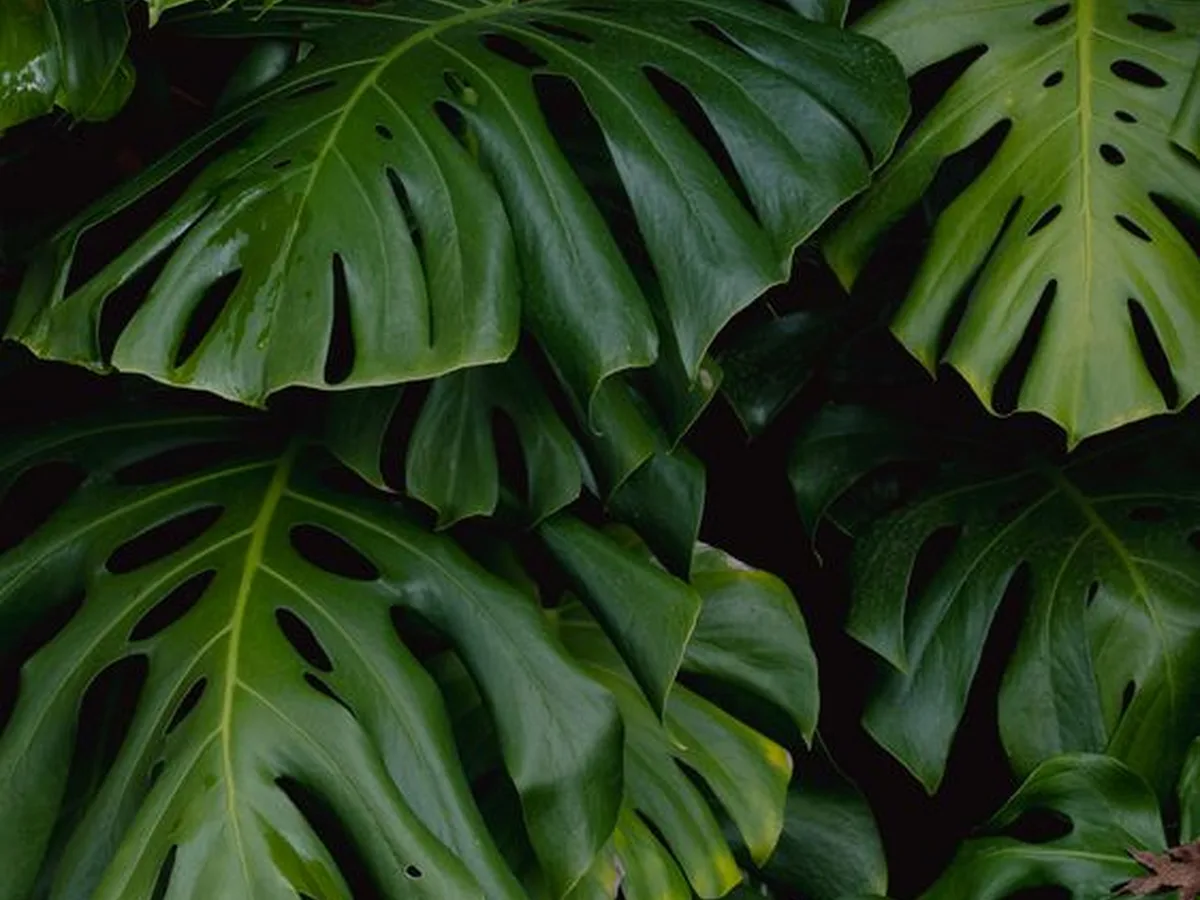
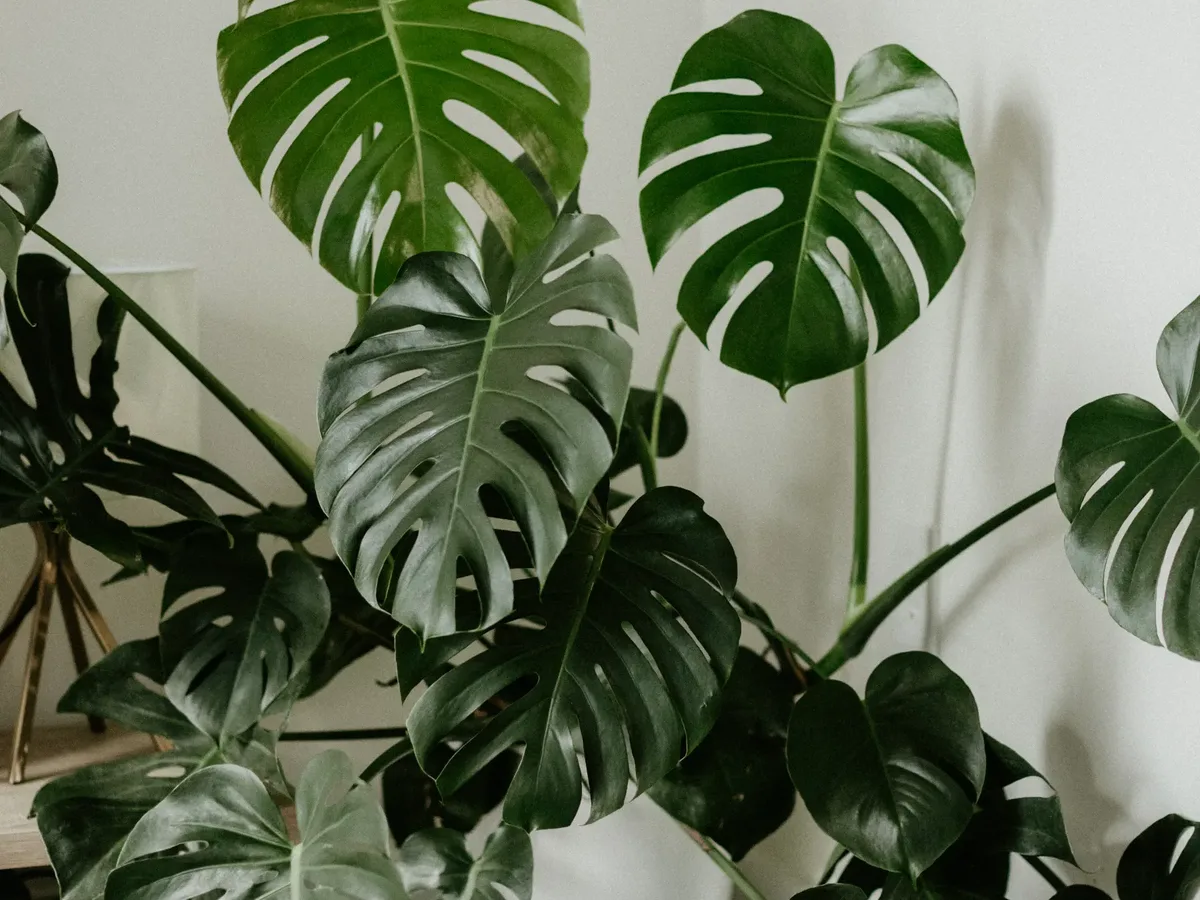
With its large, split leaves and bold tropical shape, monstera has become one of the most recognisable houseplants. The most common species sold as a houseplant is Monstera deliciosa, sometimes called the Swiss cheese plant because of the natural holes and slits that develop in mature leaves. It is a vigorous grower once settled, and while it has a reputation for being dramatic, its basic needs are straightforward: bright indirect light, a good drink when the soil dries, and something to climb.
In the wild, monstera climbs trees in tropical forests, starting in shade on the forest floor and reaching toward brighter light as it grows. That history explains much of its indoor behaviour — it tolerates shade when young, wants more light as it matures, and produces aerial roots that reach out for support and moisture.
Light
Monstera grows best in bright, indirect light: near an east-facing window, a few metres back from a south-facing window in the northern hemisphere (or a north-facing window in the southern hemisphere), or beside a window with a sheer curtain. In that light it grows steadily and develops the splits and holes that make mature leaves so distinctive.
It will survive in medium light, but growth slows and new leaves may emerge smaller and without splits. That is not a defect; young leaves naturally start whole, and fenestrations develop as the plant matures and receives enough light. Direct midday sun, especially through glass in summer, can scorch the leaves, leaving pale or brown patches. Morning sun or late-afternoon sun is usually gentler.
If your monstera leans strongly toward the window or grows long, sparse stems with wide gaps between leaves, it is asking for more light. Move it closer to the window gradually over a week or so rather than in one jump.
Water
Water monstera when the top few centimetres of soil feel dry. In a warm, bright room during the growing season this might be roughly weekly; in winter or in lower light it will be less often. Always check the soil rather than watering on a fixed day — the general principles in our guide to watering indoor plants without overwatering them apply here too.
Water thoroughly until it runs from the drainage holes, then empty the saucer so the plant is not standing in water. Monstera dislikes constantly soggy soil, and yellow leaves with soft stems are a common sign of overwatering. Brown, crispy leaf edges more often point to underwatering, very dry air, or a build-up of salts from hard tap water and over-fertilising.
Monstera appreciates moderate humidity, but it is not as demanding as some tropical plants. Normal indoor humidity is usually acceptable, though very dry, heated rooms in winter can cause brown tips. Grouping plants together, or placing the pot on a pebble tray with water kept below the pot base, can raise local humidity a little without wetting the leaves constantly.
Soil and Feeding
A chunky, free-draining mix suits monstera best. Standard indoor potting mix with added perlite and orchid bark creates air pockets around the roots and lets excess water drain, which helps prevent rot. Dense, heavy soil that stays wet for a long time is one of the most common causes of trouble.
Feed lightly during the growing season — roughly spring through early autumn in the northern hemisphere, and September through March in the southern hemisphere — with a balanced liquid houseplant fertiliser diluted to the label strength or a little weaker. Feeding every four to six weeks is plenty for most plants. In winter, when growth slows, feeding can be paused. Overfeeding shows up as brown leaf tips and a white crust on the soil surface; if you see that, flush the soil with plain water and skip the next feed.
Support, Pruning, and Training
As monstera grows, it naturally wants to climb. Without support, stems sprawl and the plant becomes wide and untidy. A moss pole, coir pole, or sturdy trellis gives aerial roots something to grip and encourages larger leaves. Gently tie the main stem to the support with soft ties, and mist the pole occasionally — aerial roots often grow into a damp moss pole, which anchors the plant firmly.
Prune to control size or shape, cutting just above a leaf node with clean, sharp scissors or secateurs. Pruned stems can be propagated: a cutting with at least one node and one leaf, placed in water or moist soil, will often root within a few weeks. Spring is a good time for pruning, when the plant is entering active growth and can recover quickly.
Wipe the large leaves occasionally with a damp cloth. Dust dulls their gloss and blocks light, and clean leaves simply look better. Check the undersides while you are there, since pests often settle there first.
Repotting
Young monstera may need repotting every year or two; mature plants can go longer. Signs it is time include roots circling the drainage holes, water running straight through without wetting the soil, or growth slowing despite good light and feeding. Choose a pot only slightly larger than the current one — a jump that is too big leaves excess wet soil around a small root system.
Spring is the kindest time to repot, giving the plant a full growing season to settle. The full technique, including how to handle the root ball gently, is covered in our guide to repotting indoor plants without stressing them. If your monstera is already very large and repotting feels daunting, refreshing the top few centimetres of soil each spring is a useful halfway step.
Common Problems
- Yellow leaves: Often overwatering, especially if the soil stays wet. Check drainage and watering habits before assuming anything else. An occasional old, lower leaf yellowing and dropping is normal.
- Brown, crispy edges: Usually underwatering, low humidity, or fertiliser build-up. Check soil moisture and flush the soil occasionally if you feed regularly.
- Leaves without splits: Common in young plants and in low light. More bright indirect light and maturity usually bring fenestrations in time.
- Leggy growth: Long stems with sparse leaves suggest the plant needs more light or a prune to encourage bushier growth.
- Pests: Spider mites, thrips, and scale insects occasionally attack monstera, especially in dry indoor air. Isolate an affected plant and treat promptly; our guide to common indoor plant pests covers identification and treatment options.
Monstera is considered toxic to pets if ingested, in general terms — check whether a plant is considered toxic to pets before placing it within reach of cats, dogs, or small children, and keep it out of easy nibbling range if you share your home with curious animals.
Frequently Asked Questions
How big will an indoor monstera get?
Indoors, with support and good light, monstera can reach well over a metre tall within a few years, and mature plants can grow considerably larger. Size is controlled by pot size, pruning, and support — a smaller pot and regular pruning keep it manageable.
Why does my monstera have no holes in its leaves?
Young leaves are naturally whole. Splits and holes develop as the plant matures and receives enough bright indirect light. If an older plant still produces only whole leaves, it may need more light or more time to establish.
Should I cut off the aerial roots?
You can, if they look untidy, but it is better to guide them toward a moss pole or back into the soil, where they help support and feed the plant. Cutting healthy aerial roots does not usually harm the plant, but it removes a natural support mechanism.
How often should I repot my monstera?
Typically every one to two years for young plants, and less often once mature. Repot when roots fill the pot or growth slows despite good care, and move up only one pot size at a time.
Is monstera safe around pets?
Monstera is generally considered toxic to pets if chewed or eaten, so it is best kept where pets cannot nibble the leaves. If a pet does eat part of the plant, contact a veterinarian for advice rather than relying on home remedies.
Conclusion
Monstera rewards simple, consistent care: bright indirect light, watering when the top soil dries, a chunky free-draining mix, and something to climb. It grows fast enough to feel rewarding, forgives the occasional missed watering, and produces increasingly dramatic leaves as it matures. Give it those basics, check it regularly for pests and dust, and it can be a striking, long-lived centrepiece in almost any bright room.