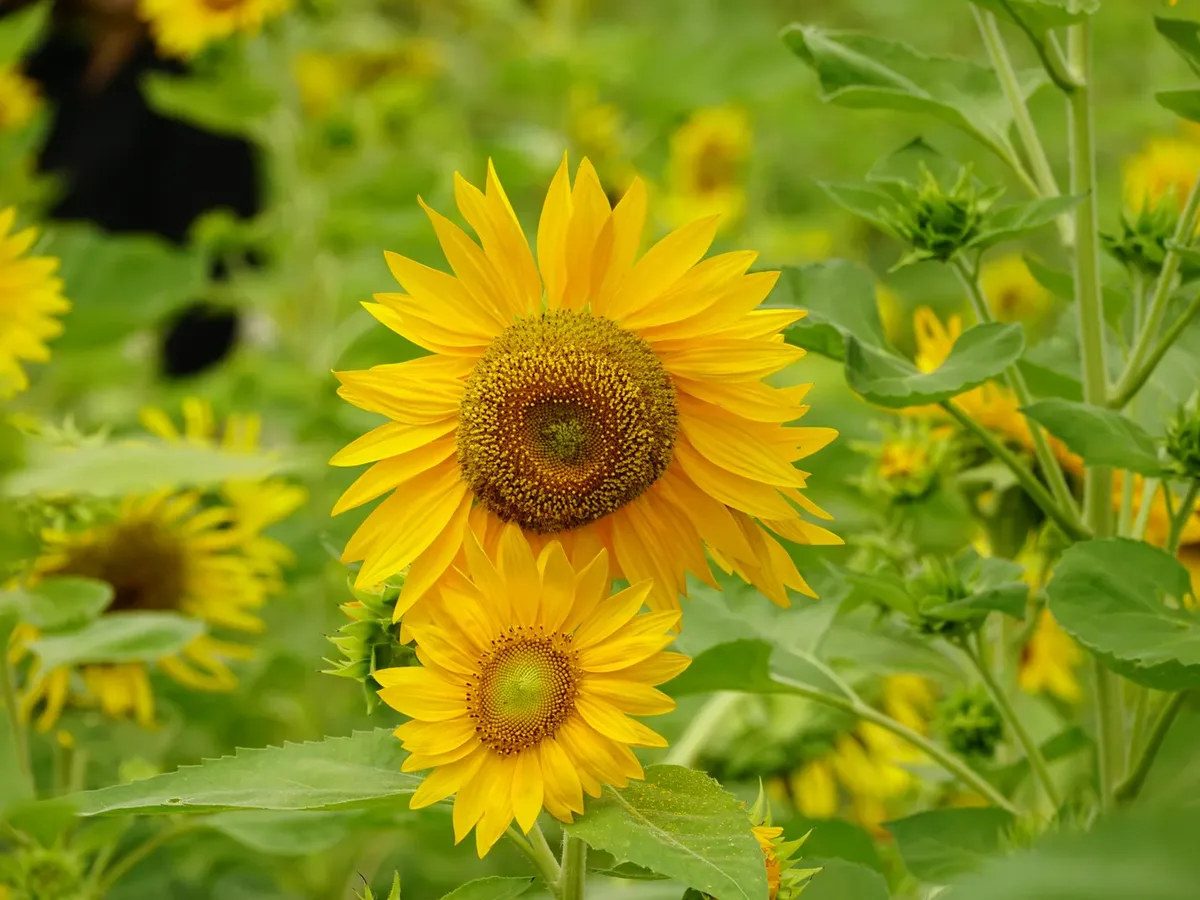
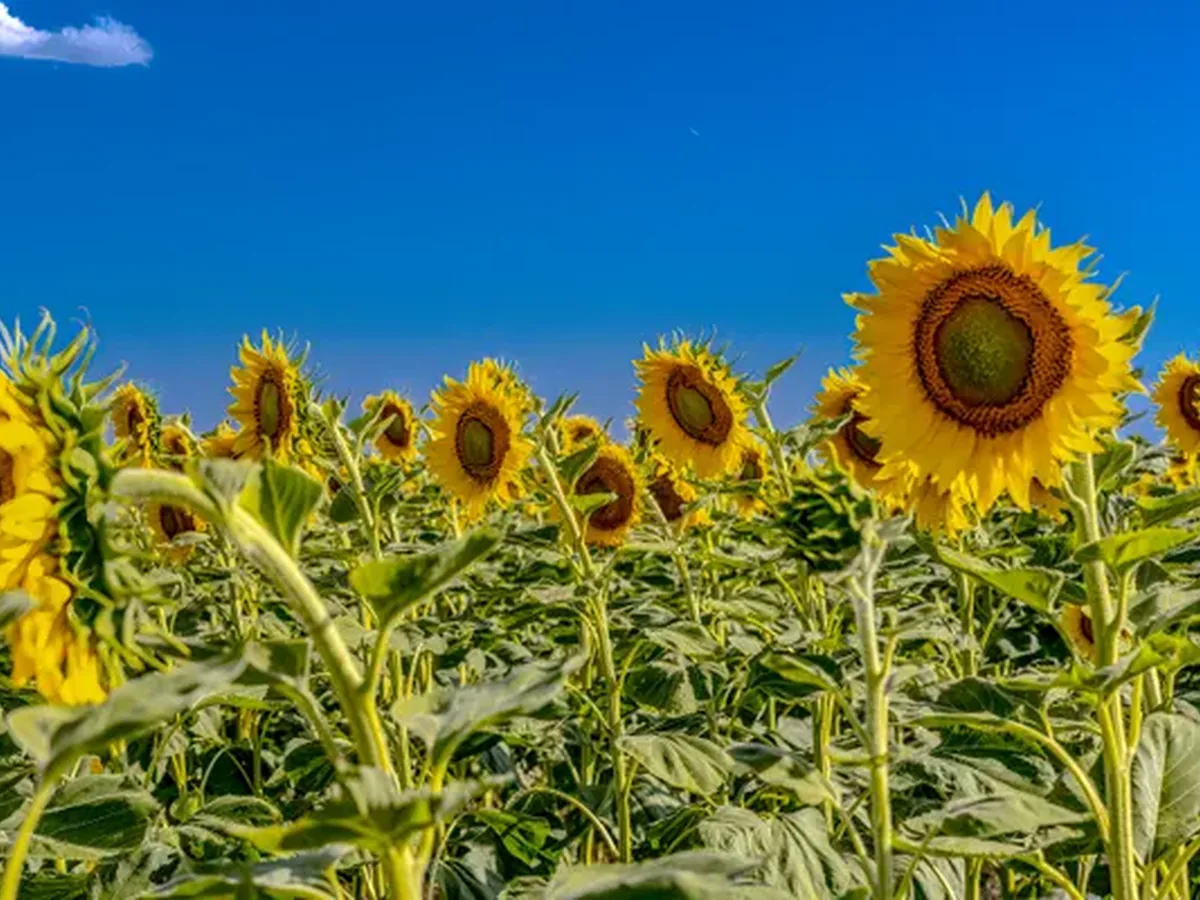
Sunflowers are one of the easiest flowers to grow from seed, and one of the most satisfying. A seed sown in spring can become a plant taller than a person by late summer, with a flower head that tracks the sun and later feeds birds. They are forgiving of beginner mistakes, grow quickly enough to keep children interested, and work in borders, vegetable gardens, and large pots.
Choosing a Sunflower Variety
Before sowing, decide what you want from your sunflowers. Giant varieties can reach three metres or more and need space, shelter, and staking. They are impressive, but they can shade smaller plants nearby. Medium varieties around 1.5 metres suit most borders, while dwarf varieties under a metre work well in pots and at the front of beds.
Colour is another choice. Classic golden-yellow is the most familiar, but there are also varieties in orange, bronze, red, and soft lemon, some with single flowers and some with multiple smaller blooms on branching stems. Branching types flower over a longer period and are good for cutting, while single-stem giants give one dramatic flower head.
Check the seed packet for expected height, flowering time, and whether the variety is branching or single-stemmed. That information matters more than the picture on the front, because a giant variety in a small pot will disappoint no matter how good it looks in a catalogue.
When and Where to Sow
Sunflowers need warmth to germinate and full sun to grow well. Sow outdoors after the last frost in your area, when soil has warmed. In the northern hemisphere that is typically mid-spring onwards; in Australia and the southern hemisphere, sow in spring there, after frost risk has passed.
You can also start seeds indoors two to three weeks earlier in pots, then transplant seedlings once frost has passed and they have a few true leaves. Indoor-started plants get a head start in short seasons, but sunflowers dislike root disturbance, so use biodegradable pots or transplant carefully while seedlings are still small.
Choose the sunniest spot available, sheltered from strong wind if possible. Sunflowers will grow in partial shade, but stems become weaker and flower heads smaller. Soil should be reasonably fertile and well-drained, enriched with compost before sowing. They are not fussy about soil type, but they do poorly in waterlogged ground.
Sowing and Growing Step by Step
- Sow seeds about 2 to 3 centimetres deep, either directly where they will grow or in pots.
- Space seeds according to variety: dwarf types about 30 centimetres apart, medium types 45 centimetres apart, and giants 60 centimetres or more apart.
- Water gently after sowing and keep soil moist — not soaking — until seedlings emerge, usually within one to two weeks in warm soil.
- Thin seedlings to the strongest plant at each position once they have a few leaves, rather than leaving several crowded together.
- Stake tall varieties early, before stems become top-heavy, using a sturdy cane and soft ties.
Protect young seedlings from slugs and snails, which can eat them overnight. A ring of grit, a physical barrier, or regular evening checks in the first few weeks helps. Birds may also dig up newly sown seeds, so covering sown areas with netting until germination can be useful.
Watering, Feeding, and Support
Sunflowers need steady water while growing, especially as flower heads form. Water deeply at the base, aiming for the soil rather than leaves, and keep soil consistently moist during dry spells. A plant that dries out badly while forming its head may produce a smaller flower, though established sunflowers tolerate short dry periods better than seedlings do.
Feeding is usually modest. Compost dug in before sowing provides much of what sunflowers need. A balanced liquid feed every couple of weeks during rapid growth can help in poor soil or in pots, but avoid excessive nitrogen, which produces tall, weak stems. In containers, feeding matters more because nutrients wash out with watering.
Support tall plants before they need it. Tie stems loosely to stakes at intervals as they grow, allowing room for the stem to thicken. In windy sites, plant sunflowers near a fence or in a group where they shelter each other, rather than as isolated specimens.
Sunflowers fit well into a sunny border alongside other heat-loving flowers. They pair naturally with easy flowers for sunny gardens such as zinnias and marigolds, and they make a tall backdrop for dahlias in beds that flower later in the season. If you are new to composting, sunflower stems and leaves can be added to compost once broken down; see composting at home for beginners for what to include and what to avoid.
Harvesting Seeds and End of Season
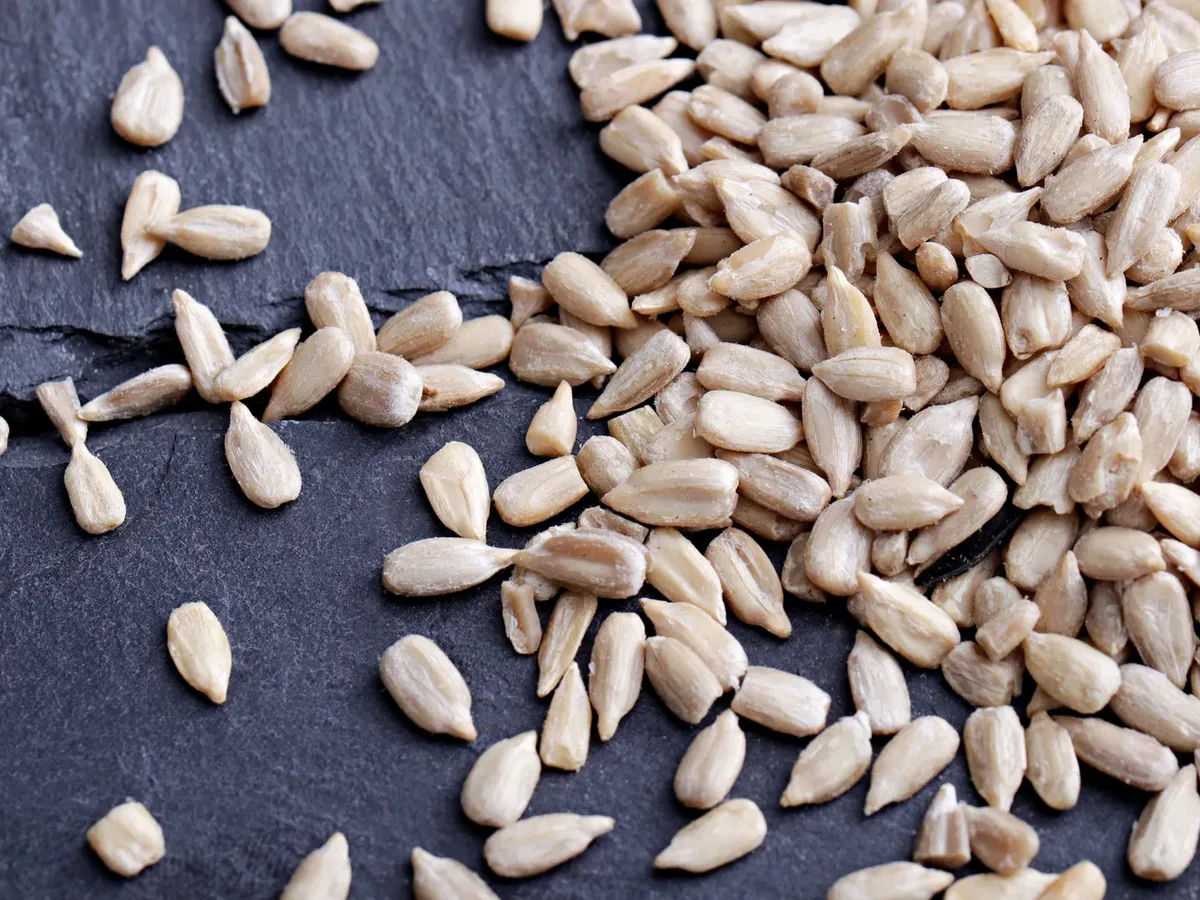
As flower heads mature, petals drop and the back of the head turns yellow-brown. Seeds are ready when they feel plump and the head droops. You can leave heads on plants for birds to eat, cut them and hang them upside down in a dry place to finish ripening, or harvest seeds for eating or for sowing next year.
To save seed, rub seeds free once the head is dry, discard any that are empty or damaged, and store dry seeds in a labelled paper envelope in a cool, dry place. Note that seeds from hybrid varieties may not grow true to the parent plant, so saved seed is best treated as an experiment rather than a guarantee.
At the end of the season, cut stems down and compost them, chopping thick stems first so they break down faster. Sunflowers are annuals, so they will not return next year from the same plant — you will need to sow fresh seed each spring.
Frequently Asked Questions
How long do sunflowers take to grow from seed?
Most varieties flower within about two to three months of sowing, depending on variety and weather. Germination usually takes one to two weeks in warm soil, followed by rapid stem growth.
Can I grow sunflowers in pots?
Yes, especially dwarf and medium varieties. Use a large pot — at least 30 centimetres wide and deep — with drainage holes, good potting mix, and regular watering, as pots dry out faster than garden soil.
Why is my sunflower leaning or falling over?
Leaning is often caused by wind, shallow roots, or a top-heavy head on a tall, unstaked stem. Stake early, plant in sheltered sun, water deeply to encourage deep roots, and tie stems loosely as they grow.
Do sunflowers need a lot of water?
They need consistent moisture while growing, particularly in hot weather and when flower heads are forming. Deep watering at the base a few times a week in dry spells is better than frequent shallow watering.
Will sunflowers come back next year?
Sunflowers grown from seed are usually annuals and die after flowering and seeding. They may self-seed if heads are left on plants and seeds fall to the ground, but for reliable results, sow fresh seed each year.
Conclusion
Sunflowers are an ideal beginner project: sow in warm soil in full sun, water steadily, stake tall types early, and protect young seedlings from slugs. Choose a variety that fits your space, give it room and sun, and you will have tall, cheerful flowers by late summer — plus seed heads for birds or for saving, if you wish. Few garden plants give so much visible progress for so little effort.