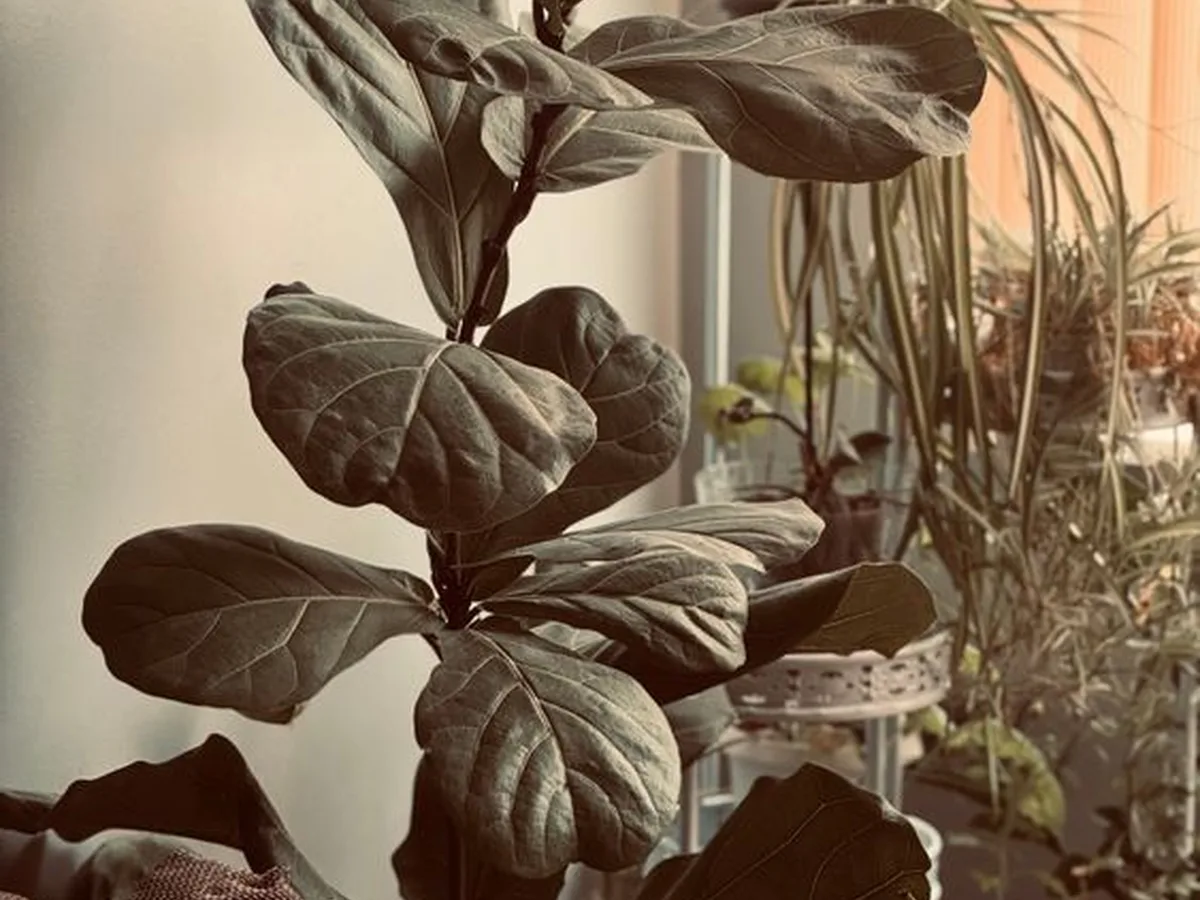
The fiddle-leaf fig has a reputation: beautiful, dramatic, and famously fussy. Its large, violin-shaped leaves make it a striking floor plant, but it is also the plant most likely to drop leaves in protest when moved, overwatered, or placed in a draught. That reputation is partly deserved — fiddle-leaf figs are less forgiving than pothos or snake plants — but much of the drama comes from a few avoidable mistakes. With stable conditions and careful watering, a fiddle-leaf fig can thrive indoors for years.
Ficus lyrata comes from tropical western Africa, where it grows as a large tree. Indoors, it is usually sold as a single-stemmed young plant or a small branched tree. It grows toward light, likes consistency, and dislikes sudden change more than most houseplants.
Light: The Deciding Factor
Light is the single most important factor for a fiddle-leaf fig. It needs bright, indirect light — near a large window with filtered sun, or a couple of metres back from a sunny window. Some gentle morning sun is usually tolerated and can encourage growth, but harsh midday sun through glass can scorch the large leaves, leaving brown patches.
In insufficient light, growth slows, new leaves emerge smaller, and the plant may drop leaves. A fiddle-leaf fig that leans strongly toward the window, or grows a long bare stem with leaves only at the top, is asking for more light. Move it closer gradually, over a week or two, rather than in one sudden jump.
Once you find a spot that works, try to keep the plant there. Fiddle-leaf figs react badly to frequent moves, and even a change of room can trigger leaf drop while the plant adjusts. Rotation is still worthwhile — a quarter turn every week or two keeps growth even — but avoid relocating the plant repeatedly.
Water: Steady, Not Generous
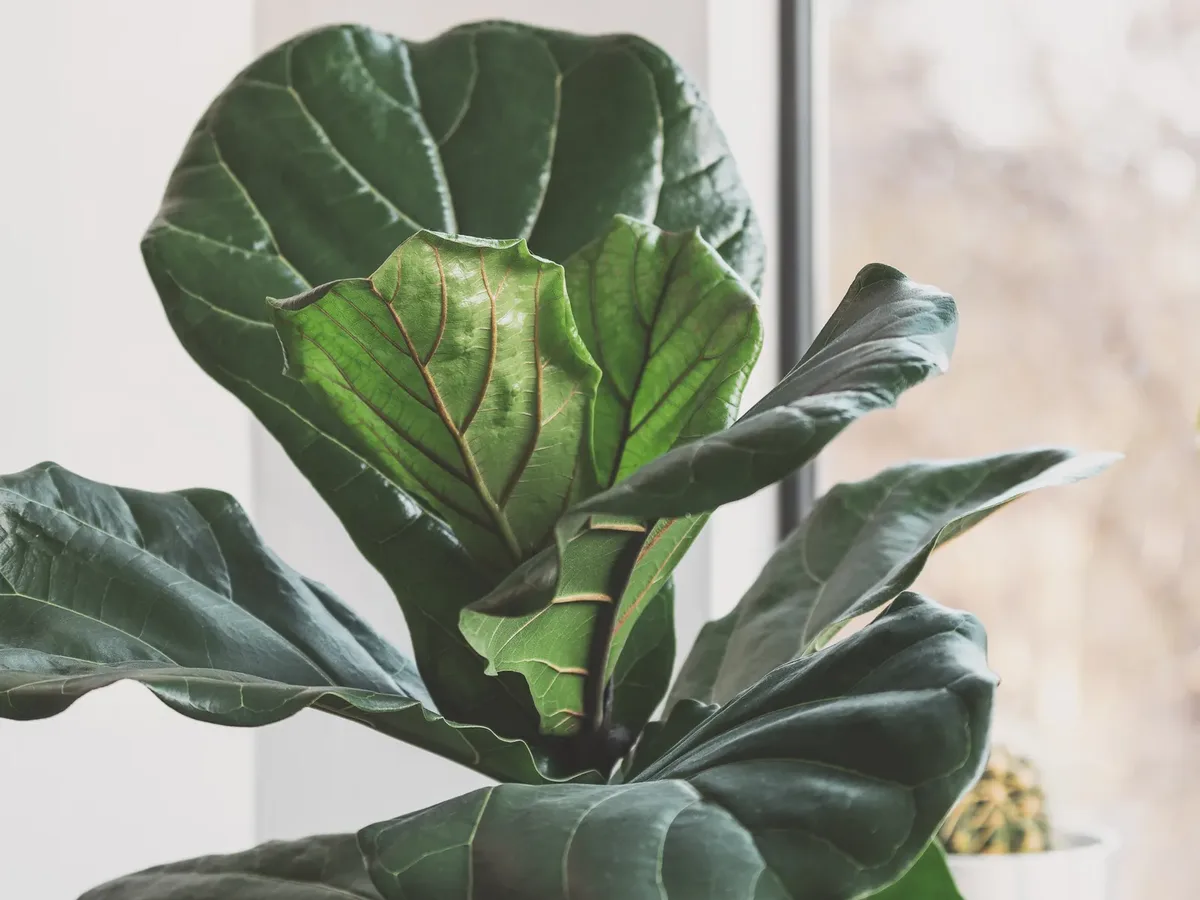
Watering is the second most common source of trouble. Fiddle-leaf figs like soil that dries partially between waterings, but they dislike both soggy soil and prolonged dryness. Water when the top several centimetres of soil feel dry, then water thoroughly until it drains from the bottom, and empty the saucer.
Brown spots on leaves are the classic symptom, and they have several possible causes, which makes diagnosis frustrating. Dark brown spots with yellow halos, especially on lower leaves, often point to overwatering or root problems. Small brown spots or crispy edges more often suggest underwatering, dry air, or sun scorch. The most reliable first step is always to check soil moisture and drainage, following the approach in our guide to watering indoor plants without overwatering them, before changing anything else.
Consistency helps. A fiddle-leaf fig watered erratically — soaked one week, bone dry for three, soaked again — is more likely to drop leaves than one watered steadily according to soil checks. Keep a simple note of when you water for the first month or two until you learn the plant’s rhythm in your home.
Soil, Pot, and Feeding
A free-draining mix is essential: indoor potting mix with added perlite and a little bark gives the drainage and air that fig roots need. The pot must have drainage holes, and the plant should never stand in water. When repotting, move up only one pot size, and expect the plant to sulk for a few weeks afterwards — leaf drop after repotting is common and usually temporary. The gentler technique in our guide to repotting indoor plants without stressing them is particularly worth following for this species.
Feed lightly during the growing season with a balanced liquid fertiliser diluted to label strength, roughly every four to six weeks. Skip feeding in winter when growth slows. Overfeeding can cause brown leaf tips and salt build-up, so if you see a white crust on the soil, flush it with plain water and pause feeding.
Fiddle-leaf figs prefer ordinary warm room temperatures and dislike cold draughts, sudden temperature drops, and direct blasts from heaters or air conditioners. Keep the plant away from draughty doors and cold windows in winter. Normal indoor humidity is usually adequate, though very dry heated air can contribute to brown edges; grouping plants or using a humidifier helps more than misting the large leaves.
Pruning and Shaping
Left alone, a fiddle-leaf fig tends to grow as a single tall stem with leaves at the top. Pruning encourages branching and a fuller shape. In spring, when growth is active, cut the stem above a leaf node with clean, sharp secateurs. The plant will usually branch from just below the cut, and the removed top can be rooted as a cutting in water or moist soil.
Notching — making a small cut above a dormant node to encourage a branch — is sometimes recommended, but results vary and it wounds the stem, so a straightforward prune in spring is the more reliable approach for beginners. Always use clean tools, and wipe up the milky sap that figs release when cut, as it can irritate skin.
Clean the large leaves regularly with a damp cloth. Dust blocks light and dulls the gloss that makes the plant attractive. While cleaning, check leaf undersides for pests, which are easier to treat when caught early.
Leaf Drop: What to Do
Leaf drop is the complaint that worries fiddle-leaf fig owners most, and it is rarely caused by a single factor. The usual triggers are a recent move, overwatering, underwatering, a cold draught, or a sudden change in light. A few leaves dropping after any of these is an adjustment response, not necessarily a death sentence.
If leaf drop continues, work through the basics in order: check soil moisture and drainage, check light, check for draughts and temperature swings, and check for pests. Change one thing at a time and give the plant a week or two to respond before changing something else. Constantly shifting conditions in search of a quick fix is itself a source of stress for this plant.
As with many ficus species, fiddle-leaf fig is generally considered toxic to pets if ingested, so check whether a plant is considered toxic to pets before placing it within reach of animals or small children who might chew leaves that fall to the floor.
Frequently Asked Questions
Why is my fiddle-leaf fig dropping leaves?
The most common causes are a recent move, inconsistent watering, low light, or a cold draught. Check soil moisture, light, and draughts in that order, change one thing at a time, and allow a few weeks for the plant to settle. A few dropped leaves after a change is normal adjustment.
What causes brown spots on fiddle-leaf fig leaves?
Brown spots can indicate overwatering, underwatering, sun scorch, or fertiliser build-up, so diagnosis starts with soil and light checks rather than a single assumed cause. Dark spots with yellow halos often relate to excess moisture; dry, crispy spots more often relate to dryness or sun.
How often should I water a fiddle-leaf fig?
Water when the top several centimetres of soil feel dry, then water thoroughly and drain fully. In most homes this is roughly weekly in the growing season and less often in winter, but soil checks matter more than any schedule, because light, pot size, and temperature all change drying time.
Can I prune my fiddle-leaf fig to make it branch?
Yes. Pruning the main stem in spring, just above a leaf node, usually encourages branching below the cut. Use clean, sharp secateurs, and be patient — new branches can take several weeks to appear.
Is a fiddle-leaf fig a good beginner plant?
It is less forgiving than pothos, snake plant, or monstera, and it suits someone who can offer stable bright light and consistent watering. If you are new to houseplants, starting with a tougher plant first builds the soil-checking habit that a fiddle-leaf fig rewards.
Conclusion
A fiddle-leaf fig asks for three things above all: bright indirect light, steady watering based on soil checks, and stability — the same spot, no cold draughts, no frequent moves. Give it those, plus a draining pot, light feeding in the growing season, and occasional leaf cleaning, and its reputation for fussiness fades. It will never be as bulletproof as a snake plant, but as a bold, architectural plant that grows into a genuine feature of a room, it repays careful, consistent care handsomely.